About Catoria sublavaria (Guenée, 1857)
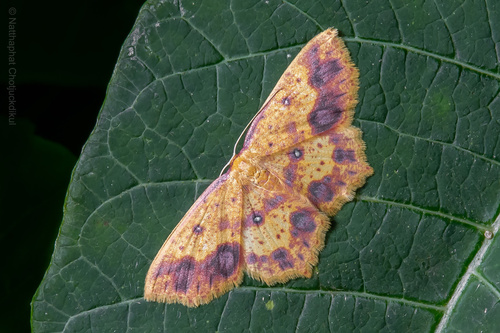
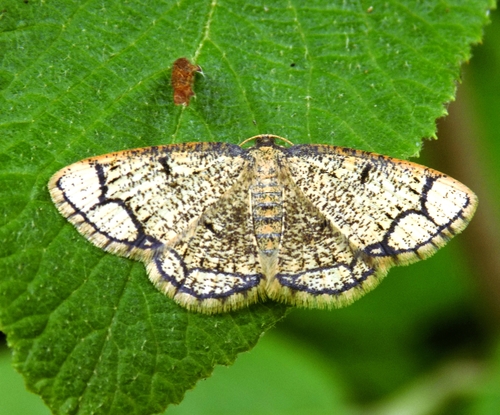
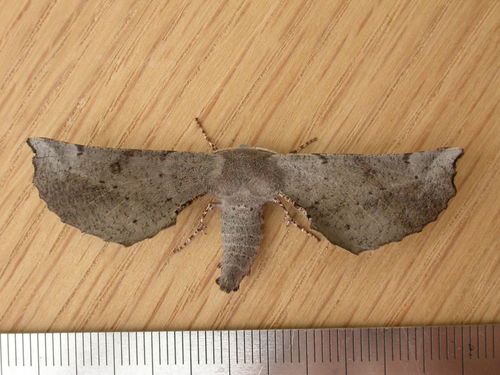
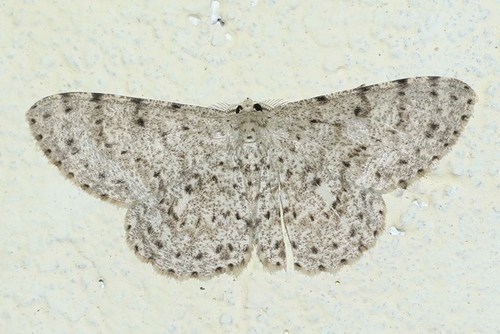
Catoria sublavaria has a wingspan of approximately 40–45 mm. In males, veins 10 and 11 of the forewings are stalked, and sometimes these veins connect to vein 12. In females, vein 11 of the forewings fuses (anastomoses) or aligns completely with vein 12. Its body is greyish-white, while the frons and palpi are black. All wings are sprinkled (irrorated) with pale fuscous spots. The forewings bear an antemedial series of specks, while both forewings and hindwings have medial, postmedial, submarginal, and marginal series of specks. Faint traces of a ring-shaped spot can be seen at the end of the cell. The ventral side of the wings is fuscous, with very large black cell-spots, and white marginal patches at the apex and middle of each wing. The larva is cylindrical, shining black with a faint greenish tint. It rests in a slightly curved position on a leaf edge. Pupation occurs inside a silken cell, built either on the ground or between two leaves. Larvae of this species feed on plant species from the genera Alseodaphne and Excoecaria.