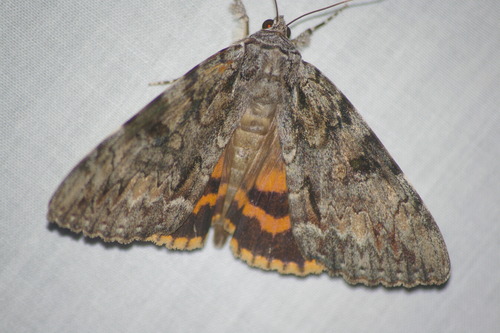
About Catocala palaeogama Guenée, 1852
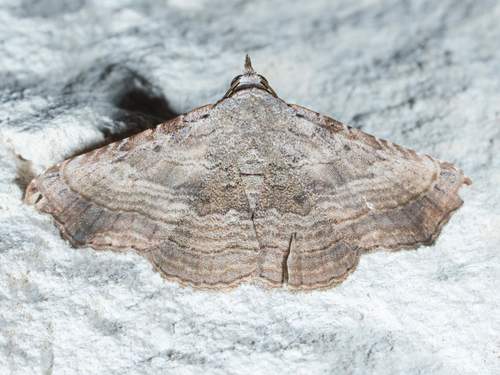
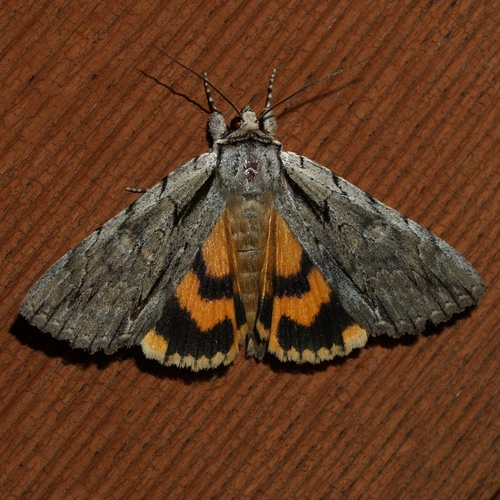
Catocala palaeogama, commonly known as the old wife underwing, is a moth species belonging to the family Erebidae. This species was first formally described by Achille Guenée in 1852. It is distributed across North America, ranging from Ontario and Quebec, where the species is rare, through Maine, New Jersey and Tennessee down to South Carolina. Its range extends west to Arkansas and Oklahoma, and north through Iowa, Indiana, Illinois and Michigan. Some taxonomic authors treat Catocala palaeogama as a synonym for Catocala neogama. The wingspan of adult individuals of this species measures between 60 and 70 mm. Adult moths are active in flight from June to October, with timing varying based on the local geographic location. There is thought to be one generation of this moth produced each year. The larvae of Catocala palaeogama feed on the leaves of Carya alba, Carya glabra, Carya illinoinensis, Carya laciniosa, Carya ovalis, Carya ovata, Castanea dentata, Juglans nigra, and Malus pumila.