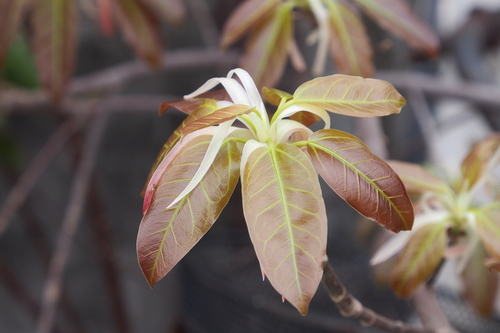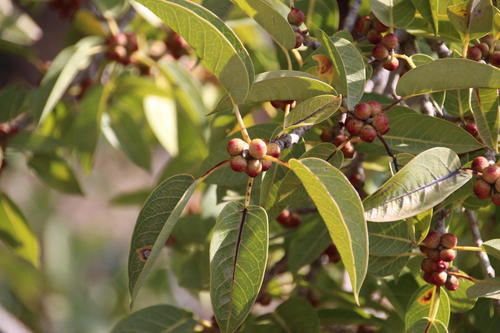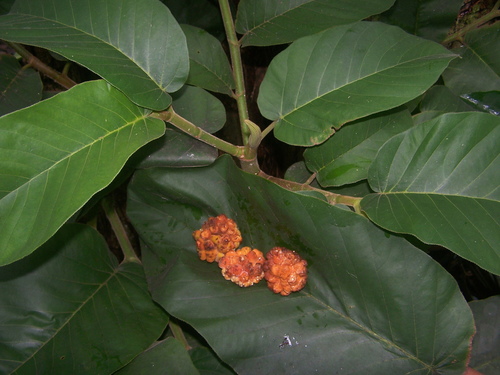
About Castilla elastica Cerv.
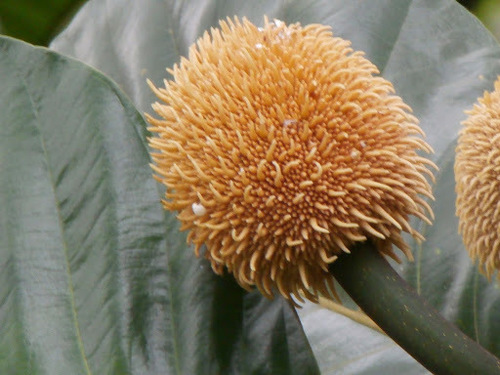
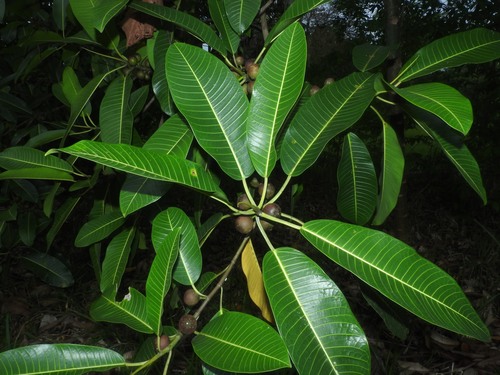
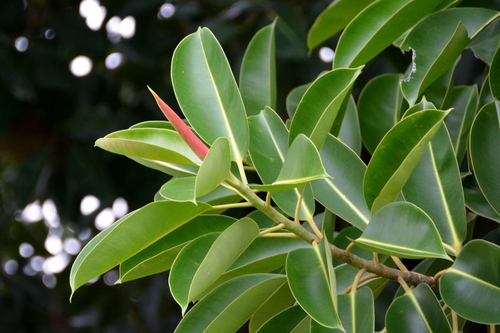
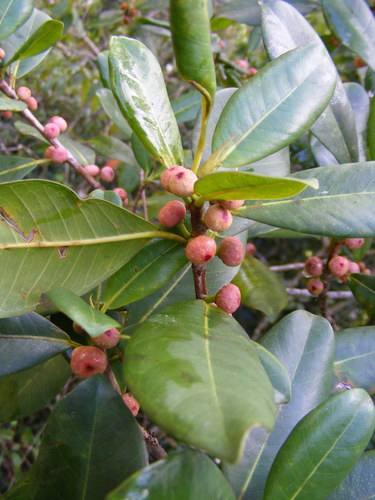
Castilla elastica, commonly called the Panama rubber tree, is a tree native to the tropical regions of Mexico, Central America, and northern South America. In pre-Columbian times, it served as the main source of latex for Mesoamerican peoples. To turn the latex collected from Castilla elastica into usable rubber, workers mixed it with the juice of Ipomoea alba, a morning glory species that typically grows wild as a vine climbing on Castilla elastica. Rubber made through this method had several uses, most notably the production of balls for the traditional Mesoamerican ballgame ōllamaliztli. The Nahuatl word for rubber is ulli or olli. This word is the origin of the Nahuatl name for the ballgame, as well as the name of the Olmecs, the ancient people that the Nahuatl associated with the origin of the ballgame (olmeca translates to "rubber people"). In Nahuatl, the name for the Castilla elastica tree is olicuáhuitl, while in Spanish it is called palo de hule.