About Castanea pumila (L.) Mill.
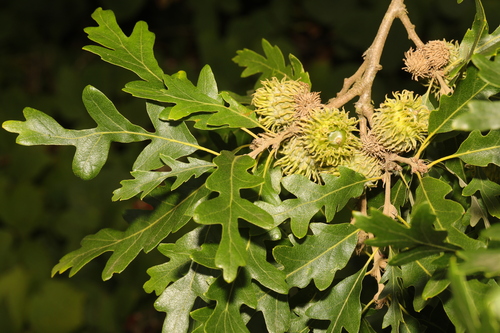
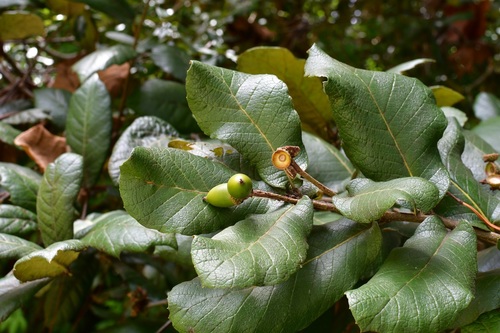
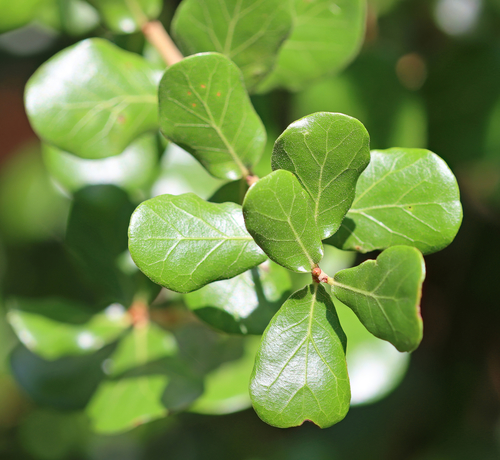
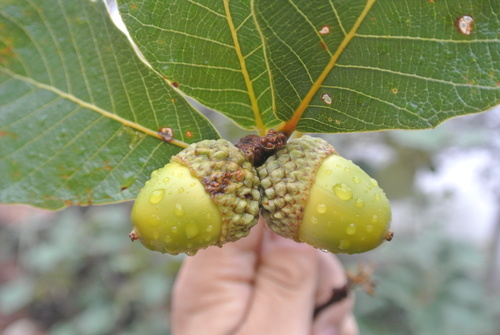
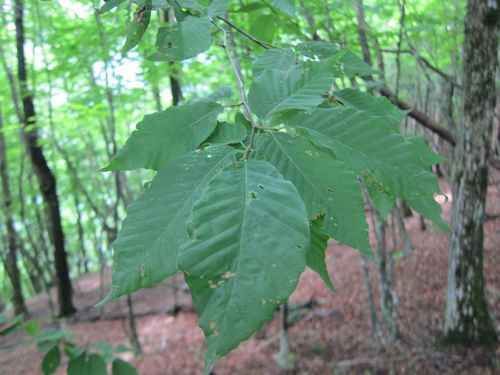
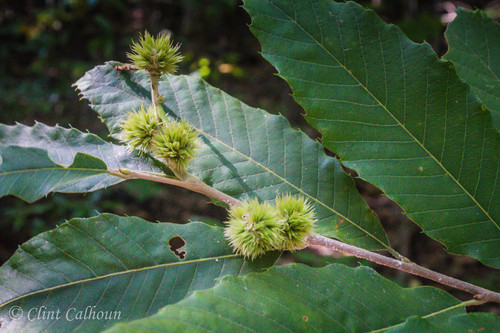
Castanea pumila (L.) Mill., commonly called Allegheny chinquapin, is a spreading shrub or small tree that reaches 2–8 m (6 ft 7 in – 26 ft 3 in) in height at maturity. Its bark is red- or gray-brown, slightly furrowed into scaly plates. The leaves are simple, alternately arranged, and narrowly elliptical or lanceolate; they are yellow-green on the upper surface, and paler with fine hairs on the underside. Each leaf measures 7.5–15 cm (3–5+7⁄8 in) long by 3–5 cm (1+1⁄4–2 in) wide, with parallel side veins that end in short pointed teeth. This species is monoecious, and its flowers open in early summer. Male flowers are small, pale yellow to white, and grow on erect catkins 10–15 cm (4–6 in) long that attach to the base of each leaf. Female flowers are 3 mm (0.12 in) long, and form at the base of some catkins. The fruit is a golden-colored cupule 2–3 cm (3⁄4–1+1⁄4 in) in diameter covered in many sharp spines, which matures in autumn. Each cupule holds one ovoid, shiny dark brown edible nut. A natural hybrid between Castanea pumila and Castanea dentata is named Castanea × neglecta. Allegheny chinquapin grows in a wide range of forest types and woodlands, including dry pinelands, old fields, pine plantations, and well-drained stream terraces. It is closely related to American chestnut, Castanea dentata, and the two species can occur in the same habitat. Allegheny chinquapin can be told apart from American chestnut by its smaller nut, which is half the size of a chestnut, not flattened (chestnuts are flattened on one side). Its leaves are also smaller than American chestnut leaves, and have less distinct teeth. Unlike American chestnut, which was devastated by chestnut blight fungus, Allegheny chinquapin is far less susceptible to the disease. While it does develop some blight symptoms, it continues to produce suckers that bear fruit. Even so, chinquapins are still vulnerable to the fungus, and there are many reports of heavily diseased, cankered trees. The first written record of this tree and its nuts was made by John Smith of Jamestown in 1612, who noted that Native Americans used the species. Native Americans prepared an infusion of chinquapin leaves to relieve headaches and fevers. The bark, leaves, wood, and seed husks of the plant contain tannin. The edible nuts can be blanched, dried, and rehydrated for use as food. The wood is hard and durable, and is sometimes used for fences and fuel, but the plant is too small for its wood to have commercial importance. Chinquapins are planted in landscapes to attract wildlife. Cutting or wounding the base of the plant at ground level causes it to grow multiple stalks, forming a thick cover used by turkeys. Squirrels and rabbits consume the nuts, while white-tailed deer graze on the plant's foliage.