About Cassytha filiformis L.
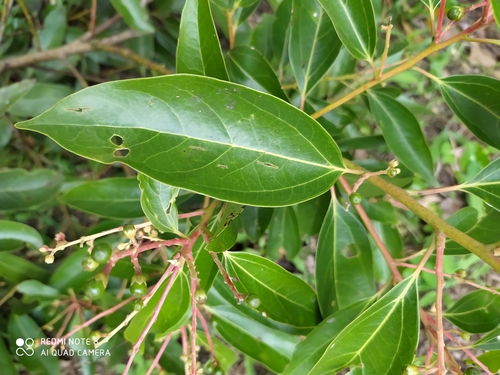
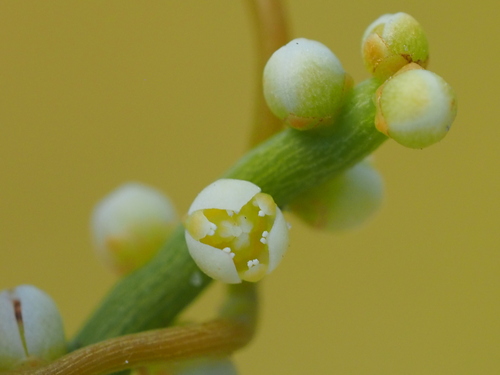
Cassytha filiformis, commonly called love-vine, is an orangish, wiry parasitic vine that belongs to the laurel family (Lauraceae). It occurs in coastal forests of warm tropical regions across the globe, including the Americas, Indomalaya, Australasia, Polynesia, and tropical Africa. This species is an obligate parasite, which means it cannot finish its life cycle without a host plant. Research conducted in Florida, in the southeastern United States, found that love-vine inhibits gall wasps by attacking the small plant growths (galls) that these wasps create to house their young. In human uses, dried and powdered stems from this vine are processed into a liquid to stimulate hair growth on the Malay Peninsula. In Polynesia, pregnant women drink juice from the vines for four weeks before their expected delivery date to reduce labor pain. In the Caribbean, this species is one of several plants called "love vine" because it is reputed to be an aphrodisiac. The 1889 book *The Useful Native Plants of Australia* records that this and other Cassytha species are called "Dodder-laurel", while the common name "Devil's guts" is also widely used. The vine frequently forms connecting cords between bushes and trees, and can become a nuisance for travelers. The same source also notes that Brahmins of Southern India use this plant to season their buttermilk, cited from the Treasury of Botany.