About Cassinia longifolia R.Br.
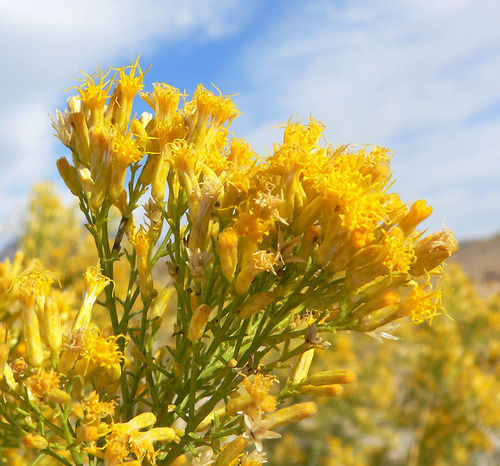
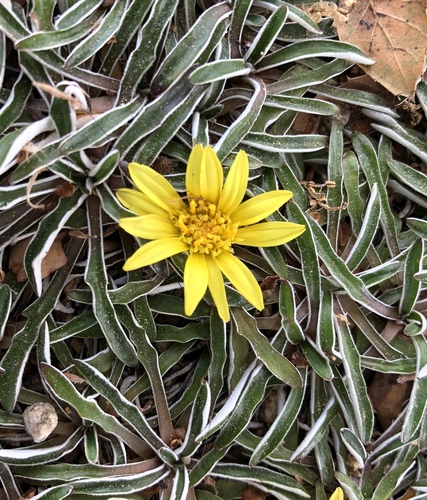
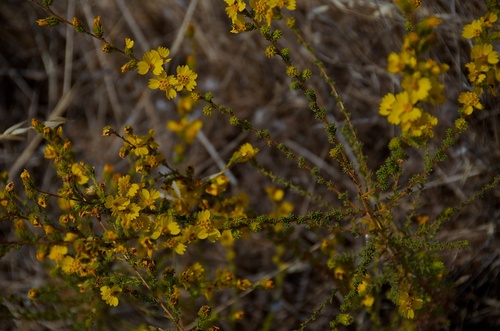
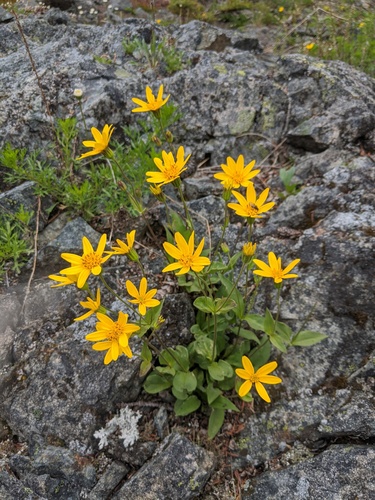
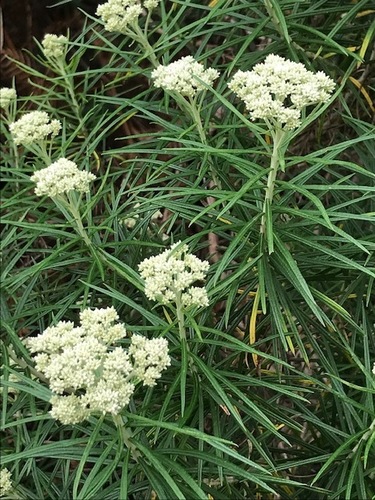
Cassinia longifolia, commonly called shiny cassinia, is an erect, aromatic shrub that typically reaches a height of 1.2 to 2.5 meters (3 feet 11 inches to 8 feet 2 inches). Its foliage is covered in short glandular hairs and is sticky to the touch. The leaves are linear, oblong, or narrow lance-shaped, measuring 15 to 95 millimeters (0.59 to 3.74 inches) long and 2 to 6 millimeters (0.079 to 0.236 inches) wide, attached to a petiole 0.5 to 1 millimeter (0.020 to 0.039 inches) long. The upper surface of the leaves is glabrous, their edges curve downward, and the lower surface is covered in fine hairs. Individual flower heads are 2 to 3 millimeters (0.079 to 0.118 inches) long and 1.0 to 1.5 millimeters (0.039 to 0.059 inches) wide. Each flower head holds five or six creamy-white florets, surrounded by three to five overlapping rows of egg-shaped involucral bracts. These flower heads are arranged in a dense corymb that can reach up to 200 millimeters (7.9 inches) in diameter. Flowering takes place in summer and autumn. The fruit is an achene about 0.8 millimeters (0.031 inches) long, with a pappus 2 to 3 millimeters (0.079 to 0.118 inches) long. Shiny cassinia grows in forest and disturbed areas, particularly after fire, and it often occurs on ridges. It is found in southeastern New South Wales and the Australian Capital Territory, and it is widespread and common in eastern Victoria.