About Casearia sylvestris Sw.
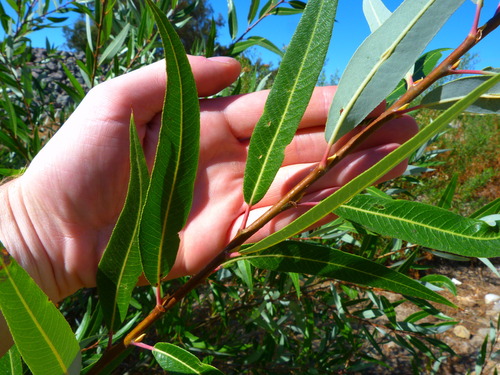
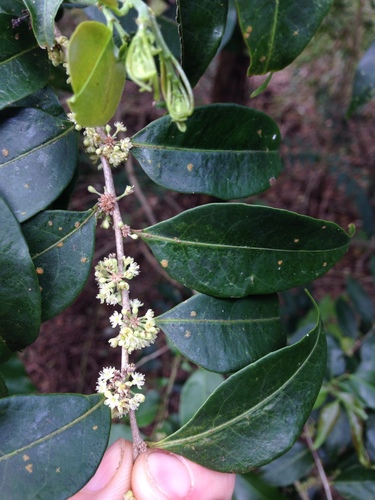
Casearia sylvestris Sw. is an evergreen shrub or tree that reaches 2–25 m (6 ft 7 in – 82 ft 0 in) in height, with a trunk that can grow up to 12 cm (4.7 in) in diameter. Its bark is beige, smooth, and lenticellate, while its branches are cylindrical and glabrous. The leaves are elliptic to lanceolate, measuring 3–16 cm (1.2–6.3 in) long and 1.5–6.5 cm (0.59–2.56 in) wide, with a cuneate to obtuse base and an acuminate to caudate apex. Leaf margins range from entire to slightly serrate, and the leaf surface is typically glabrous with dense pellucid markings. Petioles measure 0.3–1 cm (0.12–0.39 in) long, and stipules are minute, triangular, and caducous. Pale yellow to white, fragrant flowers grow year-round in axillary fascicles of 10–30 flowers. Pedicels are 2–5 mm (0.079–0.197 in) long, and are either glabrous or puberulous. There are 5 ovate sepals, which are connate at the base and erect at anthesis. The 10 stamens are inserted at the apex of the calyx tube, with filaments 0.5–1.5 mm (0.020–0.059 in) long. Staminodes alternate with the stamens and are slightly pilose. The ovary is glabrous or sparsely pilose at the apex, and tapers into a short, three-branched style. The subglobose capsule is 3–5 mm (0.12–0.20 in) in diameter, glabrous or slightly puberulent at the apex, and turns green, reddish, purple, or orange when ripe before splitting into three valves. Each fruit holds 2–6 seeds that are approximately 1.5–2 mm (0.059–0.079 in) long, ovoid, and glabrous, with a light brown foveolate testa, surrounded by a bright red-orange aril. Nicaraguan specimens show notable variation in floral pubescence. Casearia sylvestris is a highly adaptive perennial species with ecological and genetic diversity, and it plays a significant role in ecosystems including the Cerrado, Atlantic Forest, gallery forests, and wetlands. Studies have identified adaptive wood anatomical features, such as variations in vessel frequency and ray width, that improve its survival in response to environmental pressures like drought. Genetic structure research shows that the species can adapt to both restoration processes and natural habitats, with higher genetic variability found in restored forests compared to remnants of semi-deciduous seasonal forests. Population genetic studies highlight the genetic differentiation between sympatric and allopatric subordinate taxa of this species, identifying hybridization and genome duplication as factors that contribute to its genetic diversity and adaptation. The combination of genetic and ecological findings supports the recognition of distinct evolutionary units, which assists in conservation and restoration efforts. Overall, Casearia sylvestris demonstrates ecological adaptability, genetic complexity, and practical importance within its native range. In traditional medicine, Casearia sylvestris is used to treat inflammation, skin lesions, and microbial infections. When steeped in water, its leaves and bark are also considered a useful laxative and a remedy for rheumatic disorders. Research into the species' essential oils is ongoing. Casearia sylvestris is valued for its wood, resin, and ecological benefits. It is a fast-growing species that thrives in tropical forests, salty soils, full sun, and dappled shade. It regenerates well through coppicing, and has a lifespan of up to 20 years. Its globose capsule produces 2–5 seeds wrapped in a yellow, edible aril, which contrasts with the potentially toxic capsules of some related species. Cultivation of Casearia sylvestris uses fresh seeds, which are best collected when capsules begin to open, rinsed to remove arils, and sown in shaded nursery beds. Germination rates are low but variable, with seedlings sprouting within 20–30 days and reaching transplant size within a few months. Cuttings can also be used as an alternative propagation method. The tree is used in reforestation and wildlife restoration: it provides food for birds and pollen for bees, and its flowers produce a scent described as resembling honey and urine. Its fine-textured, strong wood, though susceptible to damage from wood-eating organisms, is used for construction, flooring, lathe work, cabinet making, and charcoal production.