About Cascabela thevetia (L.) Lippold
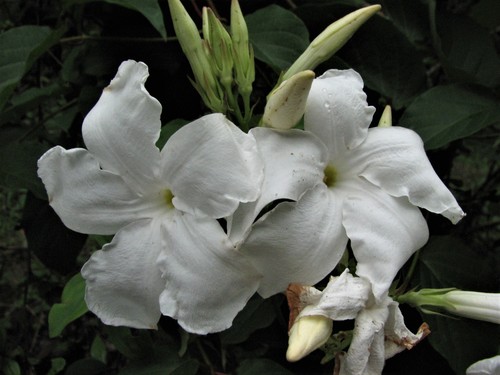
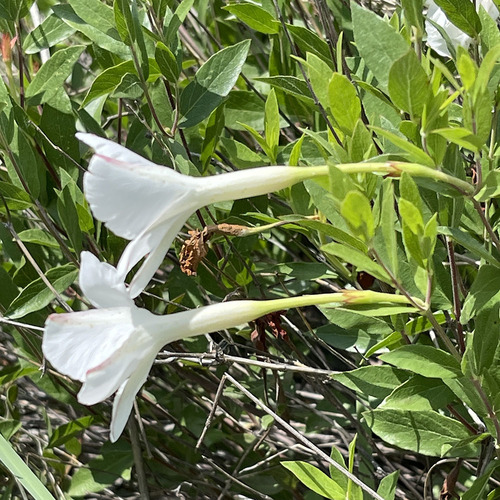
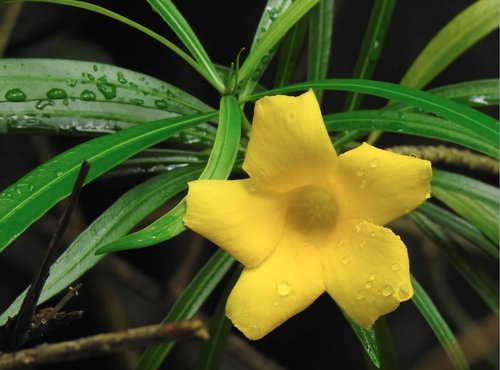
Cascabela thevetia (L.) Lippold is an evergreen tropical shrub or small tree. It has willow-like, linear-lanceolate, glossy green leaves that are covered in a waxy coating to reduce water loss, a trait typical of oleanders. Its stem is green when young, and turns silver or gray as it ages. Flowers bloom from summer to fall; the long, funnel-shaped flowers, which are sometimes fragrant, are most often yellow, less commonly apricot, and sometimes white. They grow in few-flowered terminal clusters. The fruit is deep red-black, and encloses a large seed that resembles a 'Chinese lucky nut.' Cascabela thevetia is effectively drought-resistant and tolerant to high temperatures, and has become naturalized in various semi-arid regions of India as a result. All parts of the C. thevetia plant are toxic to most vertebrates, because they contain cardiac glycosides, and many cases of both intentional and accidental human poisoning have been recorded. The main toxins are the cardenolides thevetin A and thevetin B; additional toxins include peruvoside, neriifolin, thevetoxin and ruvoside. These cardenolides are not destroyed by drying or heating, and are very similar to digoxin from Digitalis purpurea. They cause gastric upset and cardiotoxic effects. Known antidotes include atropine and digoxin immune fabs (antibodies), and treatment may also include oral administration of activated charcoal. Ovine polyclonal anti-digitoxin Fab fragment antibody (DigiTAb; Therapeutic Antibodies Inc.) can be used to treat poisoning from this species, but its cost is prohibitively high in many countries. However, a small number of bird species are known to feed on this plant without ill effects; these species include sunbirds, Asian koel, red-whiskered bulbul, white-browed bulbul, red-vented bulbul, brahminy myna, common myna and common grey hornbill. In South India and Sri Lanka, swallowing the seeds of this plant (called Kaneru කණේරු in Sinhala, Manjal arali in Tamil) is one of the most common methods of suicide in villages where the plant grows in abundance. Extracts from C. thevetia have been reported to have antispermatogenic activity in rats. In 2023, the US Centers for Disease Control and Prevention (CDC) and Food and Drug Administration (FDA) published reports of weight loss supplements that incorrectly used C. thevetia instead of the intended ingredients Crataegus mexicana and Aleurites moluccanus, an error that led to multiple hospitalizations. Cascabela thevetia is cultivated as an ornamental plant, and is commonly planted as a large flowering shrub or small ornamental tree in gardens and parks in temperate climates. In areas prone to frost, it is usually grown as a container plant, and is moved indoors to a greenhouse or home as a houseplant over the winter. It tolerates most soil types and is drought-tolerant. The plant's toxins have been tested experimentally for use in biological pest control. Seed oil from this plant has been used to make a 'paint' that has antifungal, antibacterial and anti-termite properties.