About Carya myristiciformis (F.Michx.) Nutt.
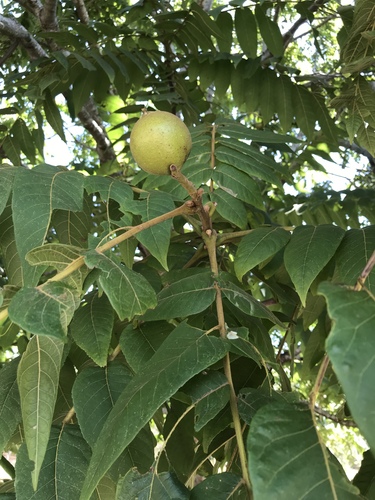
Carya myristiciformis (F.Michx.) Nutt., commonly called nutmeg hickory, also known as swamp hickory or bitter water hickory, is a tree in the Juglandaceae (walnut) family. It occurs in small, possibly relict populations across the Southern United States and northern Mexico, growing on rich moist soils of higher bottomlands and stream banks. Little is currently known about the growth rate of nutmeg hickory. Its logs and lumber are sold mixed in with other hickory species. The oil-rich nuts serve as a food source for wildlife.
Nutmeg hickory is the rarest species in the Carya genus. It grows in scattered small areas across southeastern North Carolina, eastern South Carolina, central Alabama, central Mississippi, northern Louisiana, southern Arkansas, eastern Texas, and northeastern Mexico. It is typically found in river bottomlands with calcareous soil, or on marl ridges. It is only abundant near Selma, Alabama, and in southern Arkansas. Nutmeg hickory’s native range is nearly identical to that of Durand Oak (Quercus durandii var. durandii); both species are likely relicts of an older ancient flora that once occupied the region.
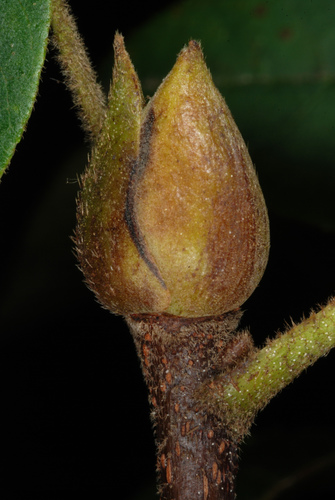
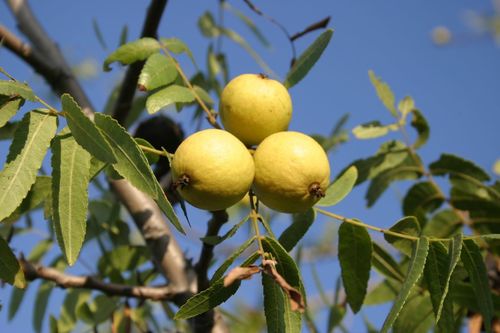
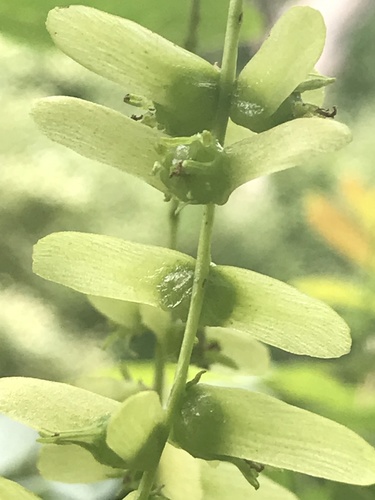
This species is monoecious and produces imperfect flowers, with both male and female flowers growing on the current year’s new growth. Male flowers are long-stalked catkins that develop at the base of new shoots. Female flowers grow in short spikes on peduncles at the tip of new shoots. Flowering occurs from April to May, shortly after leaves begin to open. Specific details about pollen production, dissemination, and pollination are not currently known. The sweet, edible nut matures between September and October of the same year it is produced, and falls from the tree between September and December. The nut has an ellipsoidal, thick, hard shell. Seed production begins when trees are approximately 30 years old, and optimum seed production occurs between 50 and 125 years of age. Good seed crops are produced every 2 to 3 years. An open-grown nutmeg hickory can produce as much as 70 liters (2 bushels) of seed in a good year. Seeds are spread by multiple methods, including squirrels and water. Seeds germinate from late April to early June, and germination is hypogeal. While burial of seeds by squirrels appears to be helpful for seedling establishment, it is not required. No specific information on vegetative reproduction of nutmeg hickory is available. Like other hickories, it likely sprouts readily from small stumps, injured or top-killed seedlings and saplings, and from roots. Large stumps do not sprout easily, so larger stumps are more likely to only produce new growth via root suckers.
Squirrels are particularly fond of nutmeg hickory nuts, and will start cutting into green nuts while they are still on the tree. Other rodents and wildlife also eat the nuts. Because the species is rare across most of its range, it does not have major economic importance. As a type of pecan hickory, its wood is slightly lower in strength and toughness than the wood of true or upland hickories. However, because only small volumes of nutmeg hickory wood are harvested, and it is difficult to distinguish from true hickory wood, it is not separated from other hickories during logging.