About Carum carvi L.
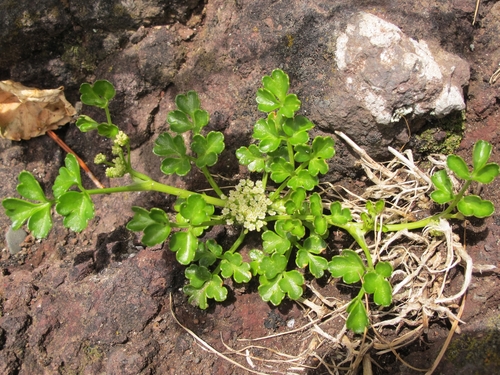
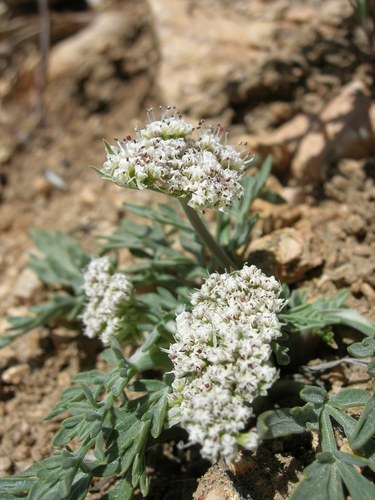
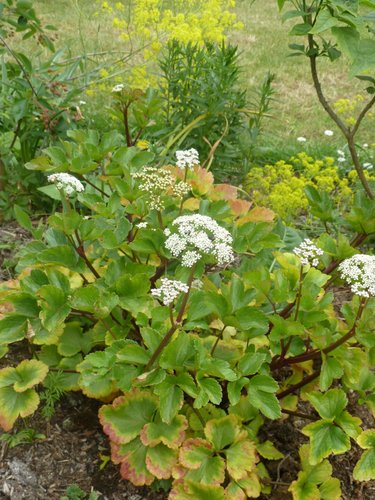
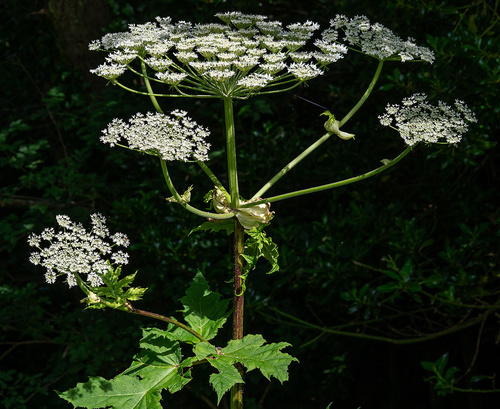
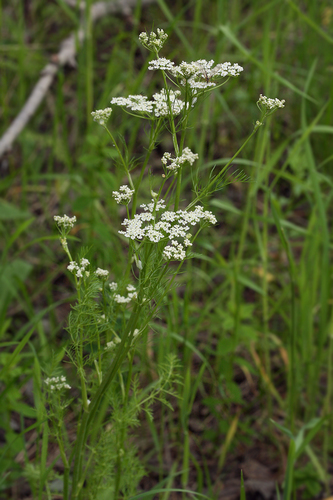
This species, Carum carvi L., commonly known as caraway, is a member of the carrot family. It has finely divided, feathery leaves with thread-like segments that grow on stems 20–30 cm (8–12 in) long. Its main flowering stem reaches 30–60 cm (12–24 in) in height, and bears small white or pink flowers arranged in compound umbels. These umbels are made up of 5–16 uneven rays that measure 1–6 cm (0.4–2.4 in) long. Caraway produces fruits that are informally called seeds; these are smooth, crescent-shaped, laterally compressed achenes around 3 mm (1⁄8 in) long, marked with five pale ridges, and have a distinctive pleasant smell when crushed. Caraway flowers in June and July.
Carum carvi is the only cultivated species in the Carum genus. Its fruits are used for many purposes in cooking, and in the production of traditional medicine products and liqueurs. Caraway grows best in warm, sunny locations, and prefers well-drained soil that is rich in organic matter. In warmer regions, it is planted in winter and grown as an annual. In temperate climates, it is grown as a summer annual or a biennial. It is widely established as a cultivated crop. The Netherlands, Poland and Germany are the top caraway producing countries. In 2011, Finland supplied around 28% of the world's caraway exports from approximately 1500 farms; this high output may be due to Finland's favorable climate and latitude, which provide long hours of summer sunlight.
Caraway fruits, which are usually used whole, have a pungent, anise-like flavor and aroma that comes from essential oils, mostly carvone, limonene, and anethole. It is used as a spice in breads, especially rye bread. A common use of whole caraway is as an addition to rye bread, which is often called seeded rye or Jewish rye bread, including Borodinsky bread. Caraway seeds are also frequently used in Irish soda bread and other baked goods. Caraway may also be used in desserts, liquors, casseroles, and a range of other foods. Its leaves can be added to salads, stews, and soups, and are sometimes consumed as an herb, used either raw, dried, or cooked, similar to parsley. The root is eaten as a winter root vegetable in some places, similar to parsnips.
Caraway fruits are used in many different European cuisines and dishes, such as sauerkraut and the United Kingdom's caraway seed cake. In Austrian cuisine, it is used to season beef, while in German cuisine it is used to season pork. In Hungarian cuisine, it is added to goulash, and in Norwegian and Swedish cuisine it is used to make caraway black bread. Caraway oil is used to produce Kümmel liquor in Germany and Russia, Scandinavian akvavit, and Icelandic brennivín. Caraway can be infused into a variety of cheeses, such as havarti and bondost, to add flavor. In Latvian cuisine, whole caraway seeds are added to Jāņi sour milk cheese. In Oxford, where caraway has become naturalized in a meadow, publicans formerly offered the seeds on trays to people who wanted to disguise the odor of alcohol on their breath.