About Carthamus tinctorius L.
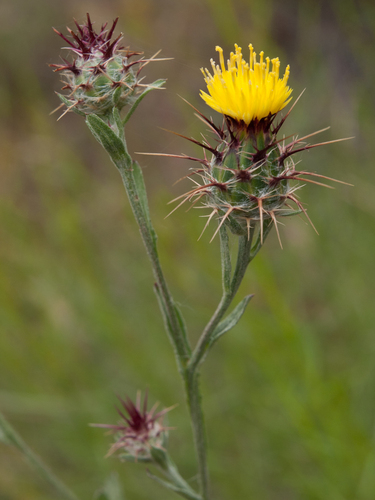
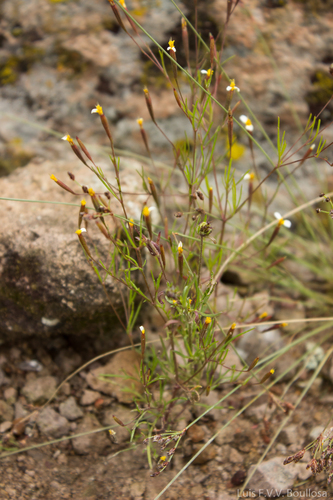
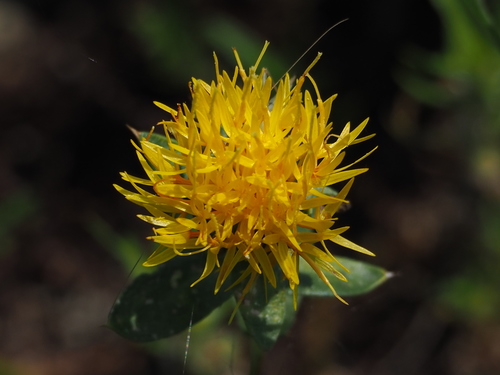
Carthamus tinctorius L., commonly known as safflower, is a fast-growing, erect annual thistle-like herb that grows in winter or spring. The plant starts as a leaf rosette, from which a branched central terminal stem emerges as day length and temperatures rise. The main stem grows between 30–150 cm (10–60 inches) tall, and the plant develops a strong taproot that can reach 2 m (6 feet 7 inches) deep. First lateral branches form once the main stem reaches roughly 20–40 cm (8–16 inches) high; these lateral branches can branch again to produce secondary and tertiary branches. The amount of branching is affected by the plant variety and growing conditions. Safflower has elongated, serrated leaves that grow along the stem, reaching 10–15 cm (4–6 inches) long and 2.5–5 cm (1–2 inches) wide. The upper leaves that form bracts are typically short, stiff, and ovate, ending in a spine. Buds form at the tips of branches. Each composite flower head (capitulum) holds 20–180 individual florets. Depending on variety, crop management, and growing conditions, one safflower plant can produce 3 to 50 or more flower heads, each 1.25–4 cm (½–1½ inches) in diameter. Flowering begins with the terminal flower heads on the central stem, followed sequentially by flower heads on primary, secondary, and sometimes tertiary branches. Individual florets flower for 3–4 days. Most commercial safflower varieties are largely self-pollinated. Flowers are most commonly yellow, orange, or red, though white and cream-colored forms also exist. The dicarpelled, epigynous ovary produces an ovule, and the mature plant produces achenes. Each flower head usually contains 15–50 seeds, though the number can exceed 100. Seed shell content ranges from 30 to 60%, while seed oil content ranges from 20 to 40%. Traditionally, safflower was grown for its seeds. It was also used to add color and flavor to food, as an ingredient in medicines, and to produce red (carthamin) and yellow dyes, particularly before cheaper aniline dyes became widely available.