About Carrhotus sannio (Thorell, 1877)
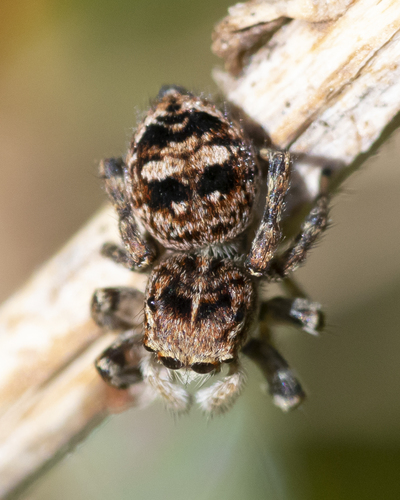
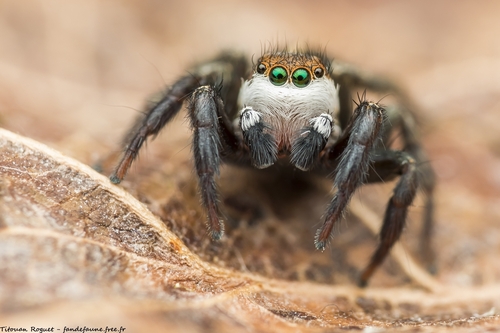
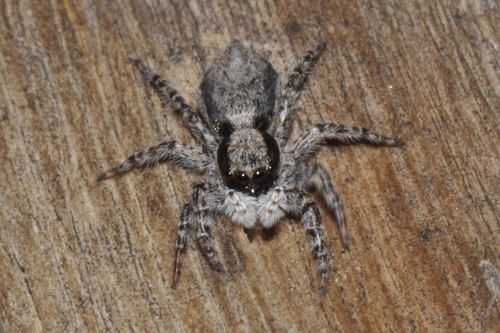
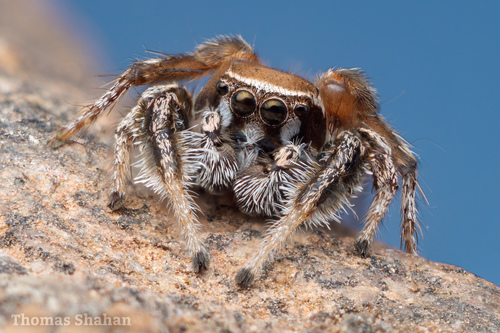
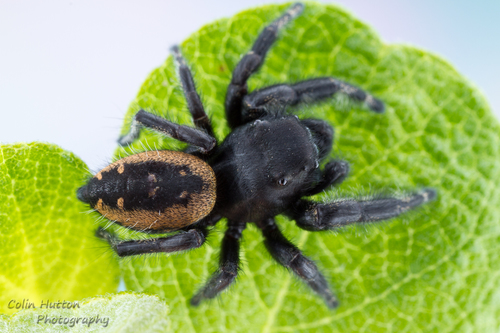
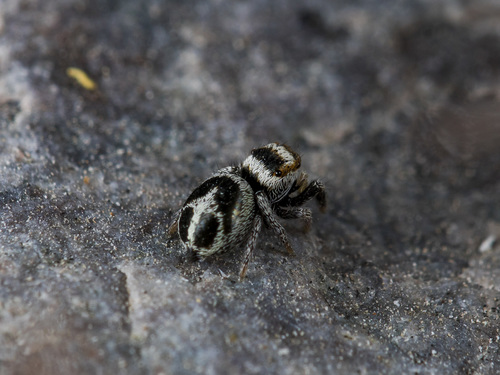
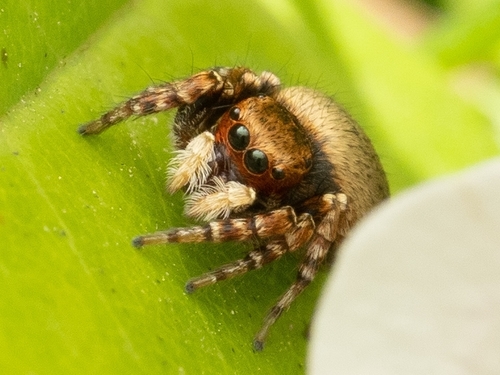
Based on Thorell's original descriptions, the spider species Carrhotus sannio shows clear marked sexual dimorphism in both coloration and size. The male of this species, originally described by Thorell in 1877, has a distinctive black cephalothorax with white marginal bands, and olive-colored pubescence on its dorsal surface. The male's total body length is approximately 5 mm. The male's legs are black with white markings and transverse bands. The male's abdomen is black with olive pubescence and distinctive white markings, which include an anterior belt, two longitudinal median stripes, and posterior transverse patches. The female was first described by Thorell in 1891 under the name Hasarius virens, and it is notably different from the male in appearance, and is reported to measure about 5 mm in total length. The female's cephalothorax is black, with greenish-yellow to olive pubescence covering most of its surface, which becomes grayish at the lateral margins. The female's clypeus is densely covered with yellowish hairs, with reddish pubescence at its sides. The female's abdomen is covered with dense greenish-yellow pubescence, and is often marked with black spots, which are sometimes arranged in oblique patterns on the posterior sides. The female's legs are brownish-testaceous with darker annulations, and the femora are largely black on their upper surface. Carrhotus sannio has been recorded from Réunion, China, Nepal, India, extending to Vietnam and Indonesia. The species appears to have a broad distribution across tropical and subtropical Asia.