About Carpodacus erythrinus (Pallas, 1770)
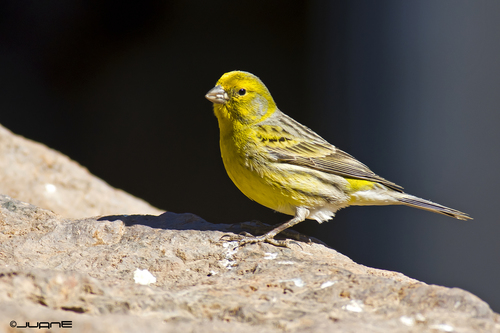
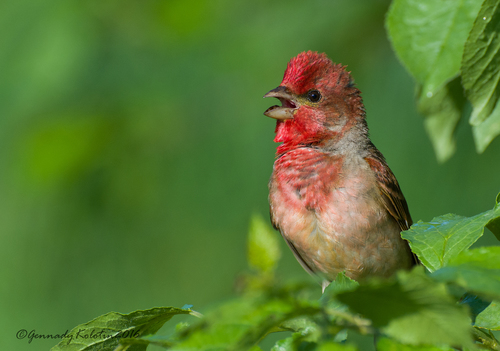
The common rosefinch, scientifically named Carpodacus erythrinus (Pallas, 1770), measures 13–15 cm (5.1–5.9 in) in length, and has a stout, conical bill. Mature males have brilliant rosy-carmine coloring on the head, breast, and rump, a heavy bill, dark brown wings with two indistinct bars, and a white belly. Females and young males have dull coloration: yellowish-brown plumage on the upper body that is brighter on the rump and greyer on the head, with buff-colored underparts. All adults moult in their winter quarters, between September and November. After moulting, the red plumage of males is subdued, and becomes brighter over the winter as feathers wear away. A rare form of common rosefinch exists where the male's red coloring is replaced by yellow. This color difference has an environmental rather than genetic cause, linked to diet and the presence of parasites. The common rosefinch has spread westward across Europe; in recent decades it has been observed in Portugal, and occurs as a rare visitor to the British Isles, with some breeding records documented there in recent years. Common rosefinches breed across a wide range stretching from the Danube valley, Sweden, and Siberia to the Bering Sea; they also breed in the Caucasus, northern Iran and Afghanistan, the western Himalayas, Tibet and China, and to Japan between latitudes 25° and 68°. In winter, they are found from southern Iran to south-east China, India, Burma, and Indochina, and occur as a vagrant in Sri Lanka. In summer, they inhabit thickets, woodland and forest edges near rivers; in winter they occupy gardens and orchards, wetlands, and locally occur in dry oak woods.