About Carlina acanthifolia All.
Carlina acanthifolia, commonly known as the Carline thistle, is a perennial herbaceous plant from the Asteraceae family. Native to Europe, it thrives in dry and rocky habitats such as grasslands, meadows, and mountain slopes.
Leaf and Stem Traits
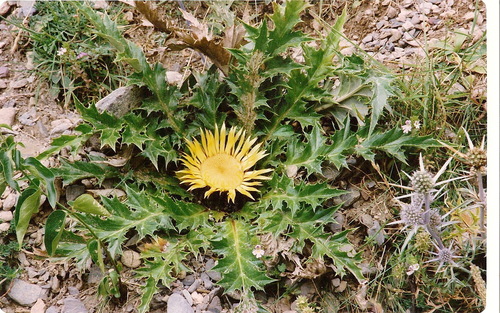
This plant forms a basal rosette of spiny, deeply lobed leaves with toothed edges. Its stem can reach up to 60 cm in height, bearing one or more large, showy flower heads at its summit.
Flower Head Features
These flower heads feature white or yellowish petals surrounded by spiny bracts, which protect them from herbivores. The Carline thistle blooms between July and September, attracting various pollinators including bees, butterflies, and flies.
Reproduction Process
After pollination, which can occur through insects or self-pollination, the plant produces small seeds that are dispersed by the wind.
Traditional Medicinal Use
In traditional European medicine, Carlina acanthifolia has been valued for its medicinal properties for centuries. Its anti-inflammatory properties are particularly noted for treating ailments such as fevers and malaria.
Ecological and Cultural Significance
Overall, Carlina acanthifolia is a fascinating plant species due to its unique appearance and medicinal uses. It plays a significant role in European flora biodiversity and conservation efforts today.