About Carex tereticaulis F.Muell.
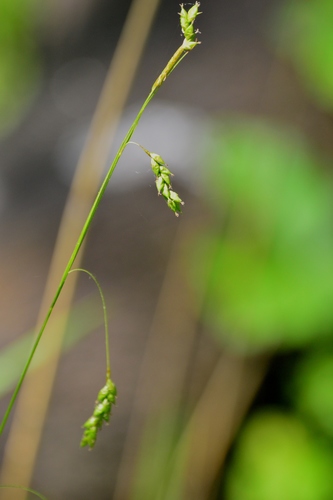
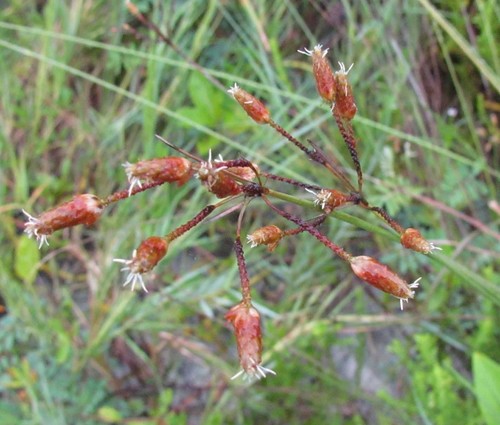
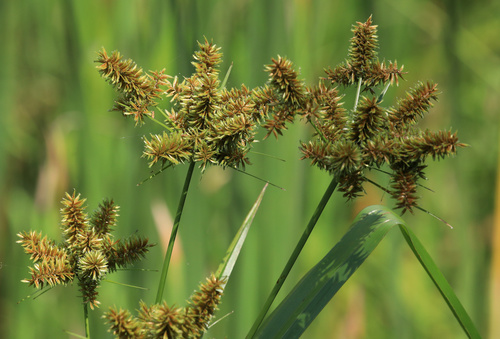
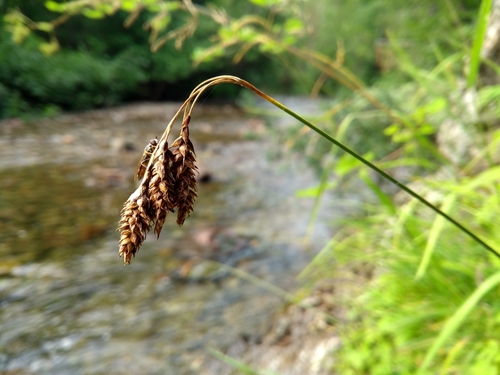
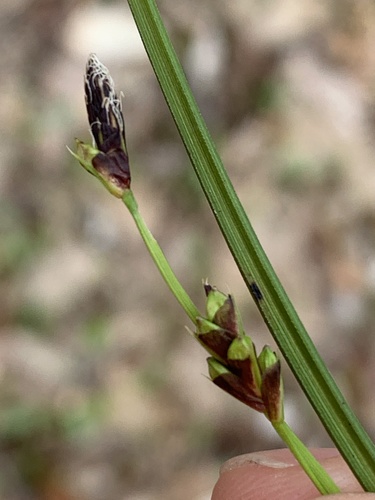
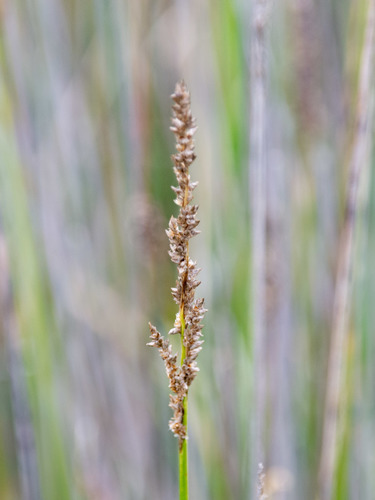
Carex tereticaulis F.Muell. is a monoecious, rhizomatous perennial grass-like sedge that grows in a tufted habit, and typically reaches a height of 0.7 to 1.2 metres (2.3 to 3.9 ft). It blooms between September and either October or November, producing brown flowers. Young plants have green leaf blades that are typically around 20 cm (7.9 in) long; over time, the blades turn dark yellow-brown and form a sheath around the cylindrical flower stems. The flowers consist of small brown bracts that cluster densely toward the end of the erect, green, hollow flowering stems. After flowering, it forms dark brown, oval-shaped nut-like seeds that are only a few millimetres in diameter. The utricle of C. tereticaulis closely resembles that of Carex appressa. This species is found throughout southern parts of Australia. In Western Australia, it occurs in coastal areas of the Peel, South West, and Great Southern regions, where it grows in black peaty-sandy soils. It is often found in seasonally inundated grassland, forest, or scrubland areas. In South Australia, its range extends west to the southern tip of the Eyre Peninsula, and east to parts of the Fleurieu Peninsula, western parts of the Murray and Mallee region, and most of the Limestone Coast; here it also grows in damp, periodically inundated areas. In Victoria, it is found in south-western, and central to northern parts of the state, and has a much less common, scattered distribution through south-eastern Victoria. It often grows in clay soils or heavy alluvium. In New South Wales, its range extends from around Guyra in the Northern Tablelands, south through the tablelands, and to the south-east along the course of the Murray River to around Barham. This sedge can be used as an ephemeral batter in wetland areas. Indigenous Australians used the plant's leaves to make baskets. Koori women split the thin stems to weave them in a spiral pattern to make baskets and capes; capes made this way were worn to cure toothache.