About Carex tenuiflora Wahlenb.
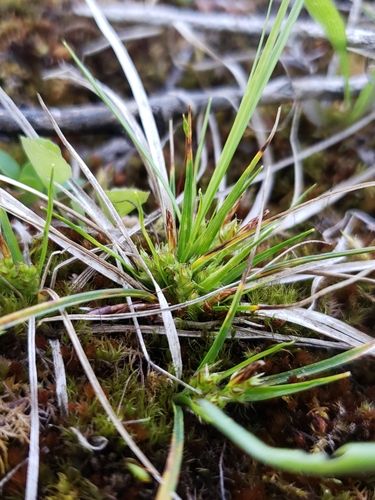
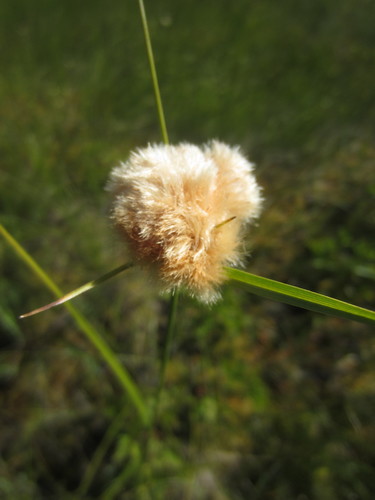
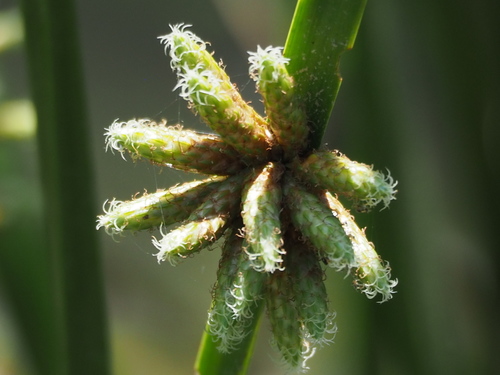
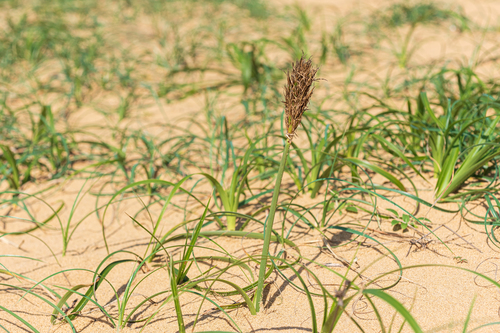
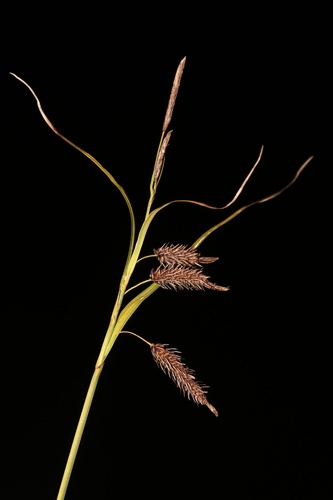
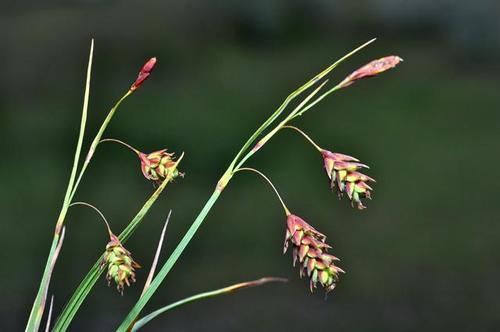
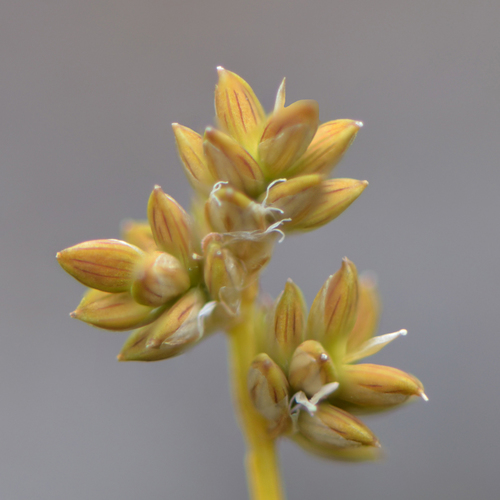
Carex tenuiflora Wahlenb. is a clump-forming, grass-like perennial plant. It is distinguished by having 2 to 4 spikes that grow closely clustered at the tip of its stem. Its stems are three-sided, slender, and reach up to around 20 inches in length. The leaves are alternate, 2 to 5 millimeters wide, 2 to 6 inches long, and are generally shorter than the plant’s flowering stems. The leaf sheaths are brownish in color. Fruit develops from late spring to early summer, and forms as clusters of achenes at the end of the pistillate spike. This species is native to the Subarctic and Hemiboreal regions of the Northern Hemisphere, including Alaska, Canada, the northern United States, Scandinavia, the Baltic States, all of Russia, the north Caucasus, Siberia, the Russian Far East, Mongolia, northern China, Korea, and Japan. It most commonly grows in peatlands, and prefers habitats with a pH of 6.