About Carex elongata L.
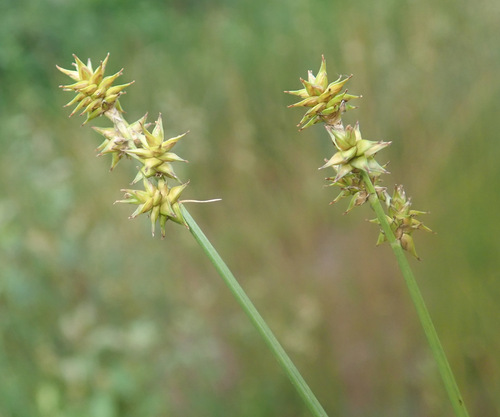
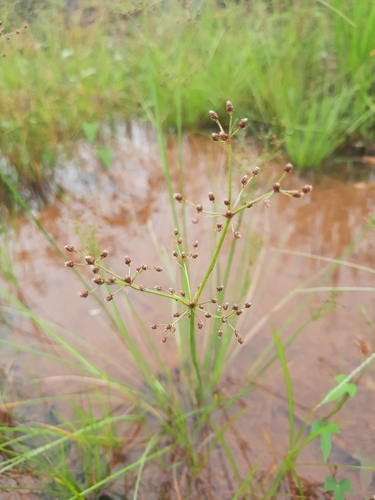
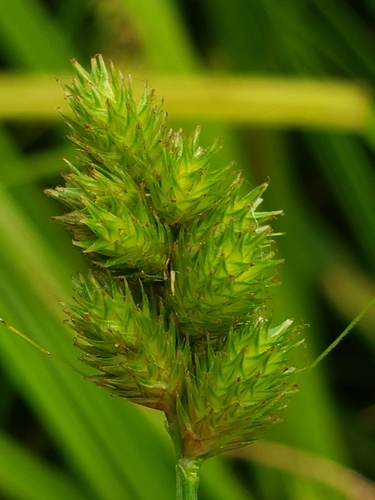
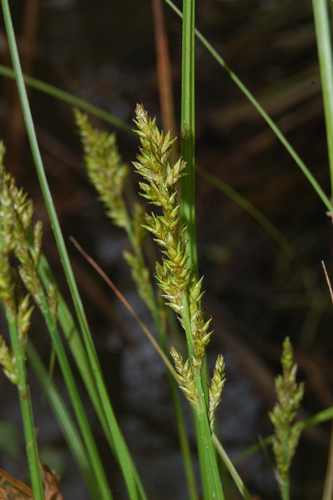
Carex elongata L. plants grow in dense tussocks that reach about 1 meter tall and 50 centimeters in diameter, a growth form created by their short rhizomes and dense production of new shoots. Each stem is trigonous, up to 80 centimeters long, and has a rough texture from upward-pointing teeth along its edges. Leaves grow up to 90 centimeters long and 5 millimeters wide, tapering to a fine sharp point. The ligule, a feature key to identifying this species, is 8 millimeters long and sharply pointed. The inflorescence holds up to 18 golden-tinged spikes, arranged fairly tightly together at the top of the stem. Its fruits, called utricles, are 4 millimeters long with dark ribs, and have 2 stigmas. The diploid chromosome number of Carex elongata L. is 2n = 56. Ecologically, this species grows in flooded woodland. In Britain, it is most commonly found in W5 alder carr, a woodland community that typically grows in river valleys and old peat bogs. It is thought that Carex elongata L. seeds germinate on floating dead wood, which keeps vulnerable seedlings from being fully inundated by water. Historically, the species also grew on the rotten pilings of old canals in England, where it occupied similar habitat conditions. It can additionally be found growing in W2 grey willow carr and W6 crack willow woodland.