About Carex eburnea Boott
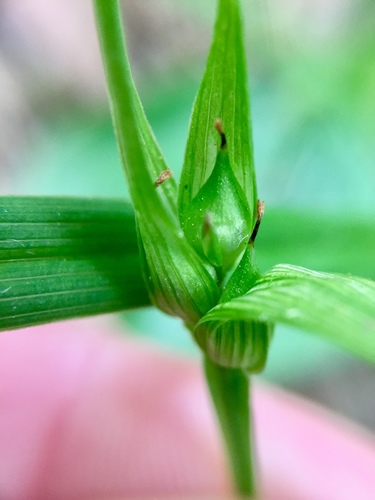
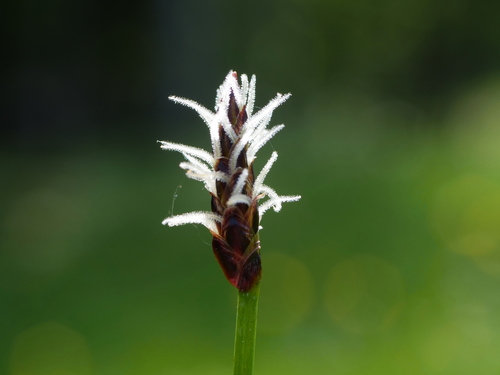
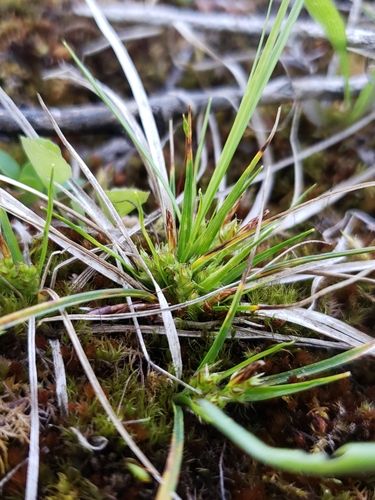
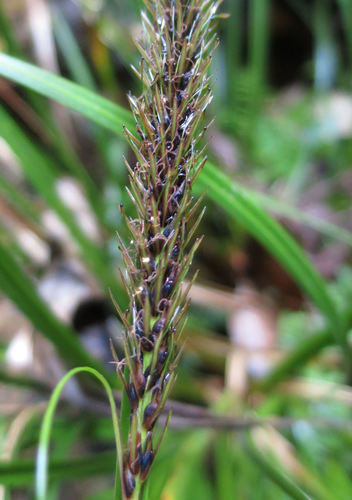
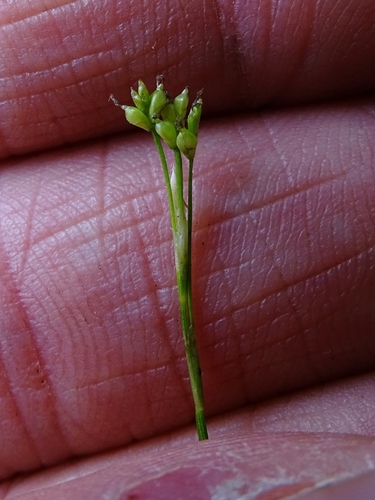
Ivory sedge (Carex eburnea Boott) is a clump-forming sedge that spreads gradually via slender, light brown rhizomes to form colonies. It produces narrow leaves measuring 0.2 to 1 mm (0.008 to 0.039 in) wide and 3 to 21 cm (1 to 8 in) long. Leaves grow from the base of the plant and are arranged alternately along the culms (stems). Culms are longer than the leaves, reaching 7 to 31 cm (2+3⁄4 to 12+1⁄4 in) in length. The bases of both leaves and culms are wrapped in a light brown sheath. After the growing season ends, leaves dry out and remain on the plant at least until the next spring. Each inflorescence (flower cluster) grows at the end of a culm, holding one staminate (male) spike above two to three pistillate (female) spikes. Each pistillate spike is enclosed at its base by a tubular bract. Pistillate spikes contain 3 to 10 florets each, and the scales beneath the florets are white and translucent. After pollination, florets produce three-sided seeds called achenes. When ripe, these achenes are glossy blackish-brown, and measure 1.5–2.2 mm (0.059–0.087 in) long by 0.7–1.1 mm (0.028–0.043 in) wide. The main inflorescence stem and the stems of the pistillate spikes are very short when the plant blooms, but lengthen considerably by the time seeds mature. As a result, achene clusters sit above the withered staminate spike, and the full inflorescence stem is always longer than the plant's leaves. Ivory sedge most commonly grows in coniferous or mixed woodlands, and can sometimes be found in fens, stable dunes, or alvar (shallow soil overlying limestone). It prefers sandy or gravelly soil with a neutral to alkaline pH.