About Carex binervis Sm.
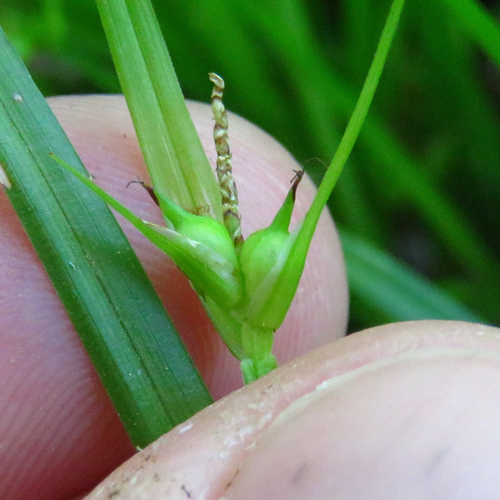
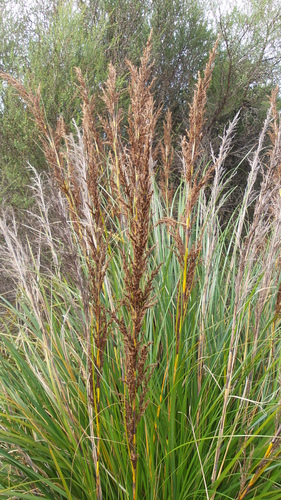
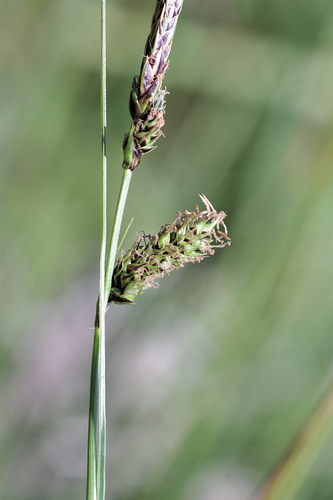
Carex binervis Sm., commonly called the green-ribbed sedge, is a European sedge species with an Atlantic distribution. It ranges from Fennoscandia to the Iberian Peninsula, and grows in heaths, moorland and other damp, acidic environments. It typically reaches a height of 15–120 cm (6–50 in), and its inflorescence is made up of one male spike and several female spikes, each of which can grow up to 45 mm (1.8 in) long. Its utricles have two noticeable green veins, which are the origin of both the species' scientific name and common name. When in its vegetative growth stage, it looks very similar to C. bigelowii, a species that generally grows at higher altitudes. C. binervis was first formally described by James Edward Smith in 1800, and is classified in Carex sect. Spirostachyae; multiple hybrids between C. binervis and other Carex species have been recorded.
Carex binervis has an oceanic distribution, and only grows in regions with high rainfall. Its range extends from Finland and Norway, through the British Isles, Germany, Belgium and France, to Spain and Portugal. Within the British Isles, C. binervis is distributed mostly in the west and north, and is more abundant in Scotland, Wales and Ireland than it is in England. Plants from Morocco that were previously classified as C. binervis are now recognized as a separate species, C. paulo-vargasii. C. binervis grows in acidic, siliceous environments, including damp heaths, moors, rocky places and mountainsides; alongside species such as Deschampsia flexuosa, it is a useful indicator of acidic substrate. This species has been recorded growing at altitudes up to 930 metres (3,050 ft) on Glyder Fach in north Wales, and there are reports of it growing as high as 975 m (3,200 ft) in the Scottish Highlands. While most sedges are primarily pollinated by wind, insect pollinators have been observed occasionally visiting C. binervis.