About Carduus argentatus L.
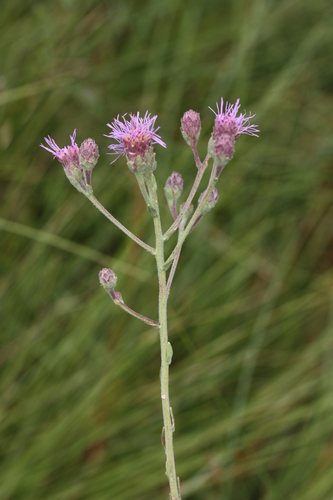
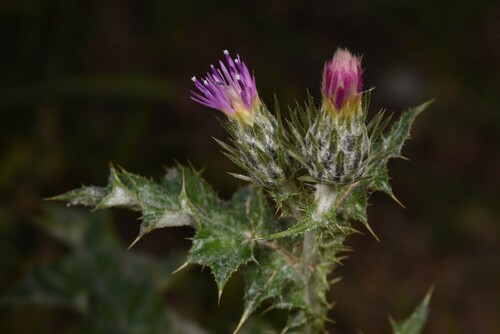
This plant species is scientifically named Carduus argentatus L. It reaches an approximate height of 30 centimetres (12 inches), and has erect stems with spiny wings. Stems may be either simple, or produce many branches. Its leaves are spiny, with toothed or serrated margins; basal leaves form a rosette, while leaves growing on the stem are arranged alternately. The flower stem is tomentose, and individual pink to lavender flowers are borne singly. These flowers bloom in April and May. The plant has spiny bracts, and ovate sepals that are mucronate but not spiny. After flowering, it produces ovoid, slightly flattened fruits called cypselae. The calyx may persist as a pappus, or detach from the fruit in complete rings. In John Wilkes's 1810 Encyclopaedia Londinensis (volume III), the species is noted to have a set of "remarkable" features, including white spots on its leaves (featured in an accompanying illustration). The entry also reports that this same white spotting trait is found in three other species of Egyptian thistle.