About Carduelis citrinella (Pallas, 1764)
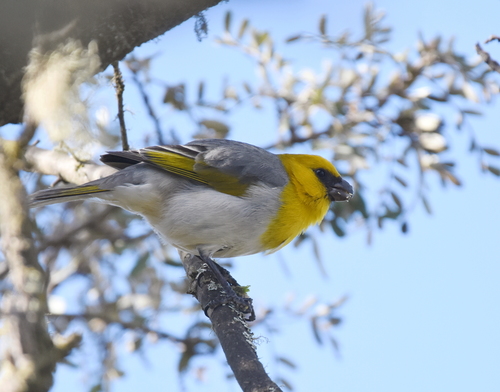
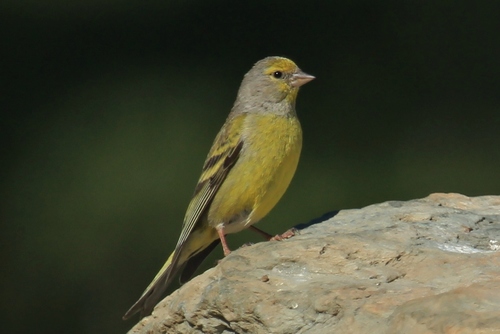
Description and systematics: The citril finch (scientific name Carduelis citrinella (Pallas, 1764)) has a total length of 12 cm (4.7 in) and an average weight of around 12.5 g (0.44 oz). Its upper body is greyish, with a brown tint to the back that also has dark black streaks. Its underparts and double wing bars are yellow. Like related species, it has a bright face mask, which is also yellow in this species. The plumage of adult males and females looks similar, though young females can have duller yellow coloration on their underparts. Unlike juvenile European Serinus species, juvenile citril finches are brown, with no yellow or green present in their feathers. The song of the citril finch is a soft silvery twittering, similar to the songs of the European goldfinch (Carduelis carduelis) and the European serin (Serinus serinus). Its main call is a tee-ee sound, which is quite similar to the call of the Eurasian siskin (Spinus spinus). Ecology: The citril finch differs from the Corsican finch (C. corsicana) in habitat choice. Mainland citril finches are largely restricted to subalpine coniferous forests and Alpine meadows, while the insular Corsican finch can occupy a wider range of different habitats, from sea level up to the highest mountain slopes. Citril finches build their nests mainly in conifers, including pines (Pinus) and spruces (Picea). Corsican finches will also nest in lower-growing bushes such as tree heath (Erica arborea), juniper (Juniperus) and bramble (Rubus). The citril finch has a wider range than its equally common eastern relative, and it is classified as a Species of Least Concern by the IUCN.