About Cardiospermum halicacabum L.
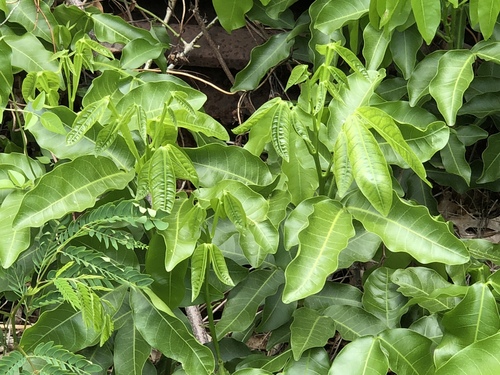
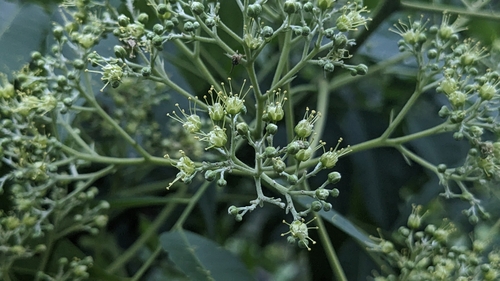
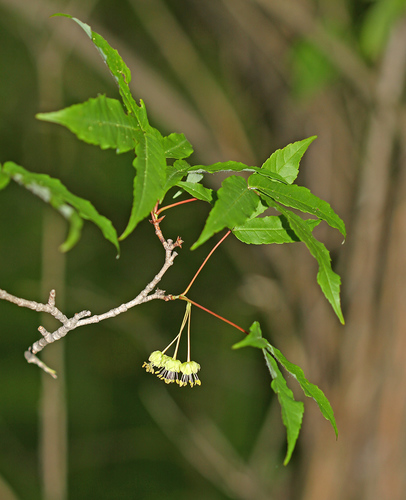
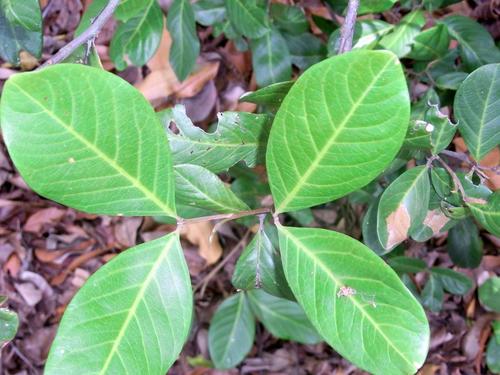
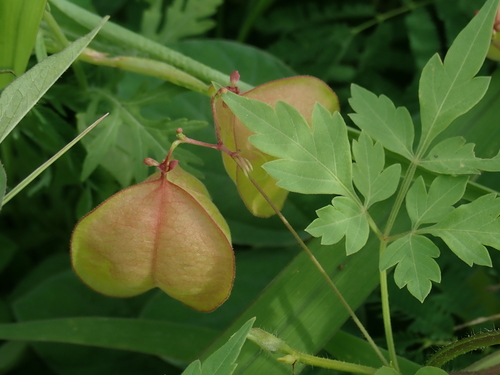
Cardiospermum halicacabum, commonly called balloon vine, is a perennial herbaceous climbing plant that can become very overgrown and even develop woody tissue at its base. It can grow to over 10 meters tall, and is capable of blooming when it reaches around 25 cm in height. Its slender, grooved stems range from hairless to sparsely covered in fine downy hairs. The triangular foliage leaves, which grow 5 to 6 cm long along the stem, are divided into a petiole and a pinnate leaf blade. The petiole measures (0.5 to) 1.5 to 3.5 cm long, and the leaf rachis measures 0.4 to 2 cm long. Its opposite leaflets are 1 to 2 cm long, while the terminal leaflets are 4 to 6 cm long. All leaf margins are serrated, and the stipules are reduced to tiny scales that fall off early in development. The inflorescence is cymose, borne on the side of a 5 to 9 cm long, sparsely downy-haired inflorescence stem; this structure holds two 1 mm long bracts, two coiled tendrils, and three to seven flowers. Known chemical constituents of this plant include triterpene saponins, halicaric acid, catechin tannins, terpenes, phytosterols, flavonoids, and quebrachitol. A 1989 text records the following traditional and medicinal uses: The root is diuretic and demulcent. It is mucilaginous, but has a nauseous taste, and is used to treat rheumatism. Sanskrit medical writers describe the root as emetic, laxative, stomachic, and rubefacient, and prescribe it for rheumatism, nervous diseases, and piles, among other conditions. The leaves are used to treat amenorrhoea. According to Rheede, leaves of this plant are administered to treat pulmonic complaints on the Malabar coast. The plant is also used in homeopathy to treat eczematic skin; a mother tincture made from the flowering parts of the plant is prepared for this purpose, and this tincture is also processed into creams and ointments. The green parts of the plant are eaten as a vegetable. According to Ainslie, the root is considered laxative, and is given in a dosage of half a cupful twice daily. Dymock wrote that it appears Hindus administer balloon vine leaves internally mixed with castor oil for rheumatism, and also apply an external paste made from the leaves; a similar external application is used to reduce swellings and tumours of various kinds.