About Cardamine heptaphylla (L.) O.E.Schulz
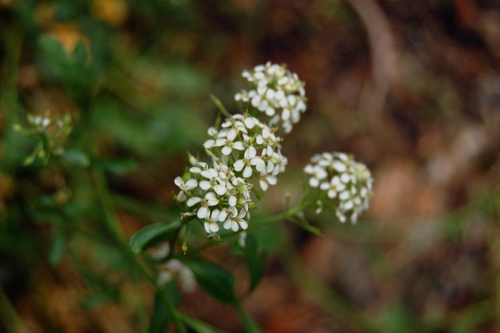
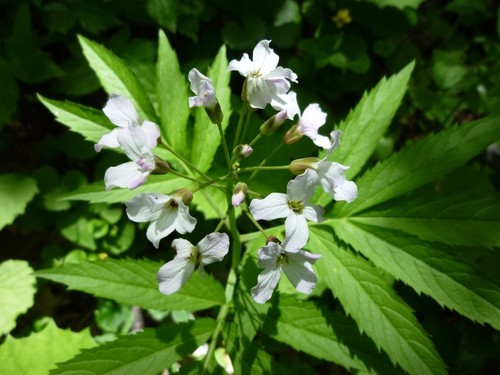
Cardamine heptaphylla (L.) O.E.Schulz is a deciduous, perennial, rhizomatous herbaceous flowering plant that typically grows 30 to 60 centimeters (1.2 to 2.4 inches) tall. It has a glabrous, erect, unbranched stem, a horizontally creeping rhizome, and a small number of very large imparipinnate leaves. These leaves bear 5 to 9 large opposite ovate-lanceolate leaflets with irregularly toothed edges. Large flowers of this species are arranged in a many-flowered inflorescence, which is made up of a cluster of four broad cup-shaped flowers. Each flower is held on a rather long pedicel, and can be white, pink, or purplish. Petals are obovate, 18 to 23 mm long, usually somewhat wrinkled, and three times the length of the calyx. The corolla has a diameter of 15 to 25 millimeters (0.59 to 0.98 inches). This species blooms from April to July. Its flowers are hermaphroditic, and pollination is carried out by bees, flies, butterflies, and moths. The fruit produced is a pod 4 to 7 cm long. This species is widespread in Central and Southern Europe, ranging from Northern Spain to Italy and southwestern Germany. It grows mainly in mountain woods, especially in beech and spruce forests, and sometimes grows on plains, at elevations up to 2,200 metres (7,200 ft) above sea level. It prefers calcareous soils.