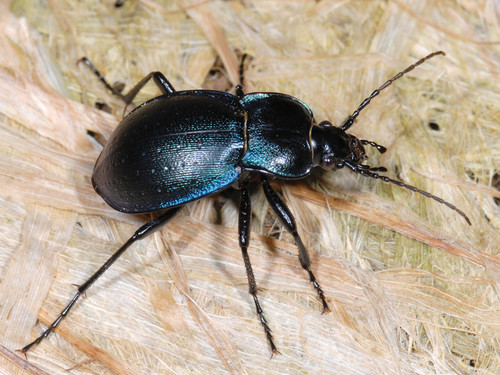
About Carabus hungaricus Fabricius, 1792
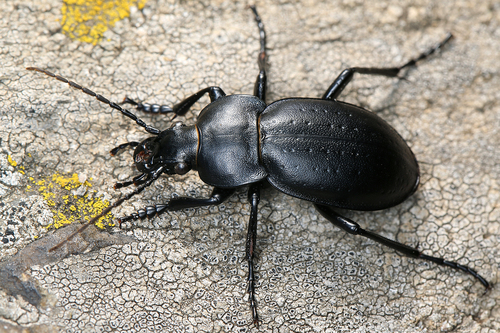
Carabus hungaricus Fabricius, 1792 is a beetle species native to the Palearctic. Its distribution across Europe is disjunctive, with three distinct major distribution areas: A) Ukrainian and Russian steppes, B) a small isolated area in Bulgaria, and C) the Carpathian Basin. Across its entire range, the habitats this species occupies are fragmented, so populations are often isolated from one another. In Europe, the species has been recorded in Austria, Bulgaria, the Czech Republic, Hungary, Moldova, Romania, central and southern Russia, Serbia, Slovakia, and Ukraine. It is a typical steppe species that lives in sandy grasslands and dolomitic grasslands. Most of its populations live in calcareous sandy grasslands, stretching from Deliblat (Deliblatska Peščara, Serbia) through Banat (Serbia and Romania), along Hungarian sandy areas bordering the Danube River, all the way to Vienna (Austria) and South Moravia (Czech Republic). Numerous populations grow on acidic sand grasslands in the Nyírség area, near the city of Debrecen, Hungary. A well-known historical collecting site for this beetle was the dolomitic grasslands of the Buda Mountains, near Budapest, the capital of Hungary.