About Capparis lasiantha R.Br. ex DC.
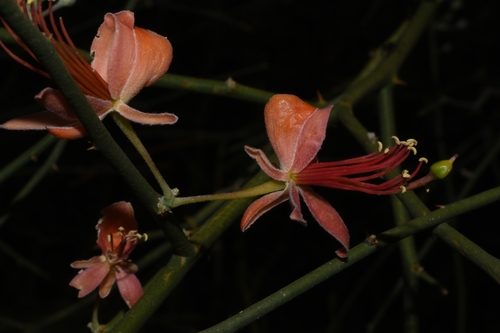
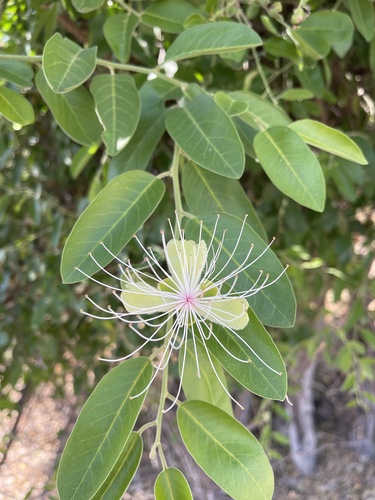
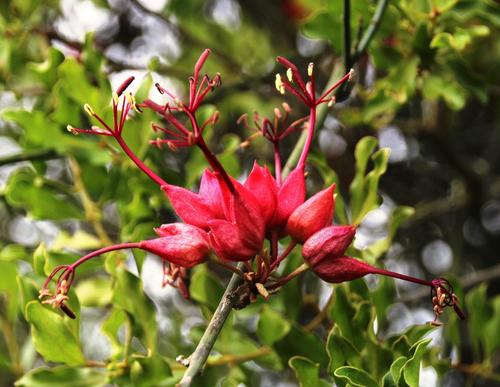
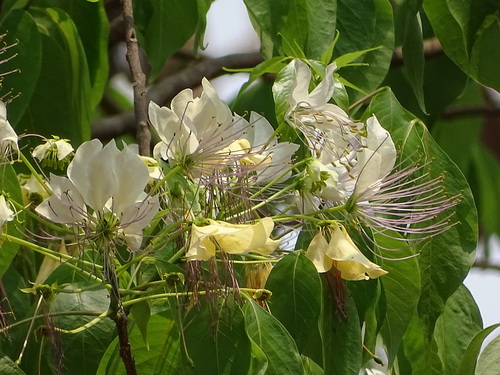
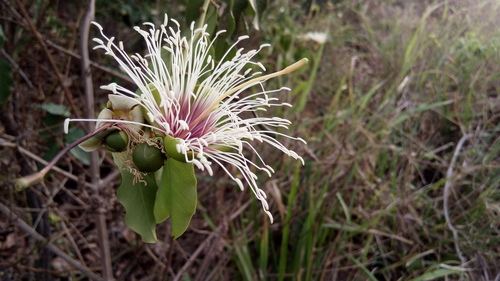
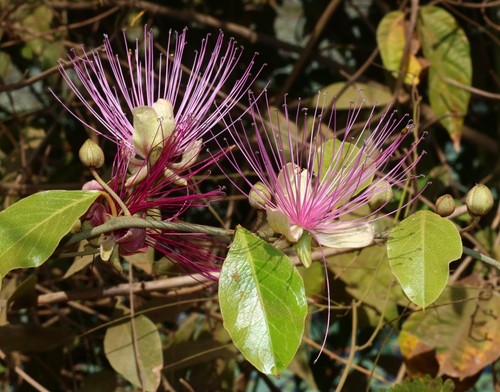
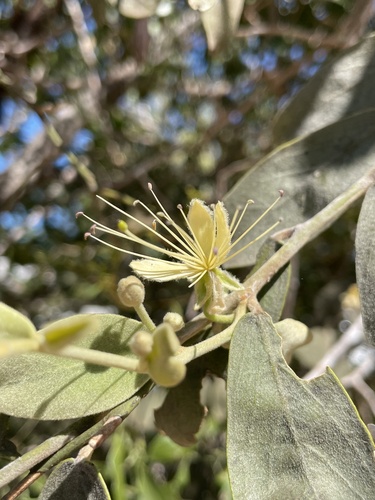
Scientific name: Capparis lasiantha R.Br. ex DC. Seedlings and young plants of this species start growth as climbing vines, which cling to host plants using sharp spines along their stems. Some individuals keep this climbing growth form through maturity, while others develop into scrambling shrubs that reach up to 3 m (10 ft) in height. Mature plants produce large, white, fragrant flowers. After flowering, they form hard, ellipsoidal fruit that grows up to 4 cm (1.6 in) long. As the fruit ripens, it becomes soft and fragrant, and eventually splits open to expose a sweet, edible pulp that surrounds the seeds. In ecology, caterpillars of the caper white butterfly (Belenois java) feed on the leaves of Capparis lasiantha. This species has also been recorded as a host plant for the mistletoe species Lysiana subfalcata. For human uses, Aboriginal people across the species' range traditionally ate the fruit as food. In the Broome region, a bark preparation was used to treat animal bites and stings. During drought periods, farmers can use the plant's leaves as livestock fodder. In cultivation, Capparis lasiantha is a drought-tolerant species that can be grown in arid or subtropical gardens. It has horticultural potential thanks to its heavy flowering and edible fruit, and it can be propagated from seed.