About Capparis decidua (Forssk.) Edgew.
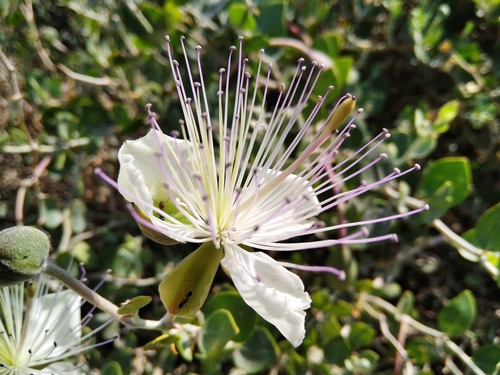
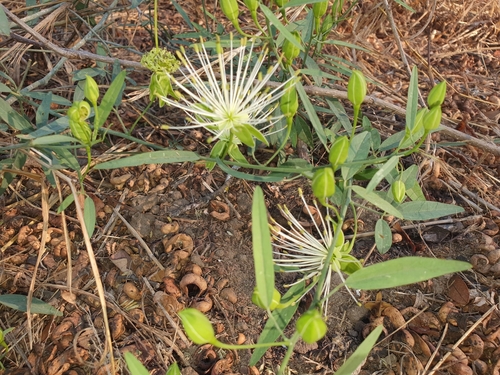
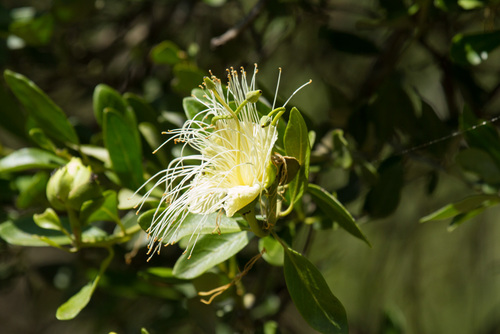
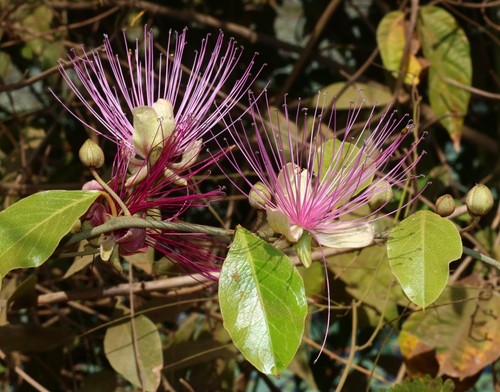
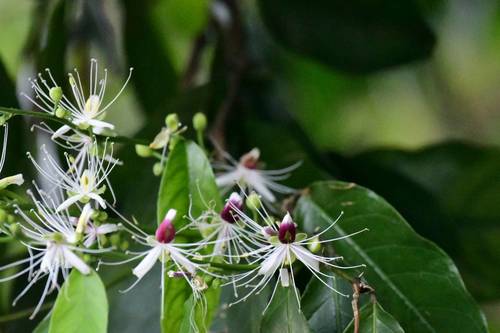
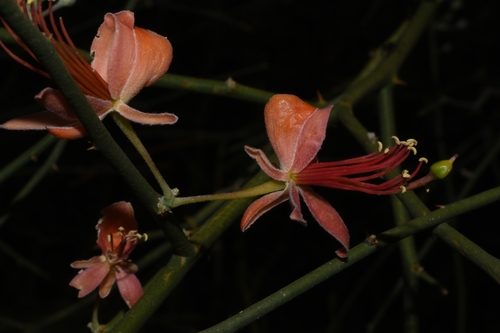
Capparis decidua (Forssk.) Edgew. is a small, heavily branched tree or shrub. It grows a large mass of slender, gray-green leafless branches; small caducous leaves only grow on its young shoots. It rarely grows taller than 5 metres, or 16 feet. Its new leaf flush emerges between November and January. Conspicuous red flowers bloom in two periods: March to April, and August to September, and the fruits ripen by May and October respectively. The plant produces pink, fleshy berries that are readily eaten by birds. It coppices well and produces root suckers freely. It is extremely drought-resistant and can tolerate some frost. This species grows in arid regions across North Africa, the Middle East, and South Asia, including the Thar Desert. Khair city in Uttar Pradesh, India is famous for its Kair trees. Both the fruit and young buds of Capparis decidua can be eaten raw. Its spicy fruits are used to prepare vegetables, curry, and fine pickles, and the plant can attract helpful insectivores. The plant is also used in folk medicine and herbalism. It can be used for landscape gardening, afforestation, and reforestation in semidesert and desert areas, and helps prevent soil erosion.