About Cantherhines pardalis (Rüppell, 1837)
Size
Cantherhines pardalis can reach a maximum total length of 25 centimetres (9.8 inches), while the more common length of mature individuals is around 15 centimetres (5.9 inches).
Dorsal Fin Structure
Its dorsal fin is split into two sections. The anterior dorsal section holds two long, curved spines, while the posterior dorsal section has 32 to 36 soft rays. The first dorsal spine sits directly above the middle of the fish's eye, and there is a deep groove along its back that the spine can fold into.
Anal Fin Structure
The anal fin has no spines, and contains 29 to 32 soft rays.
Color Morphs
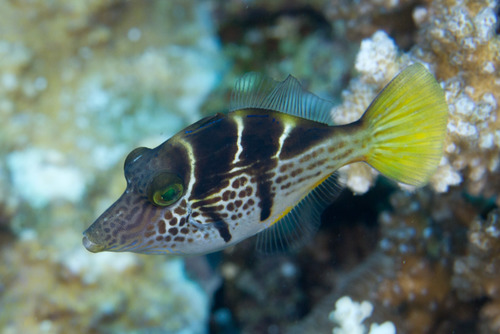
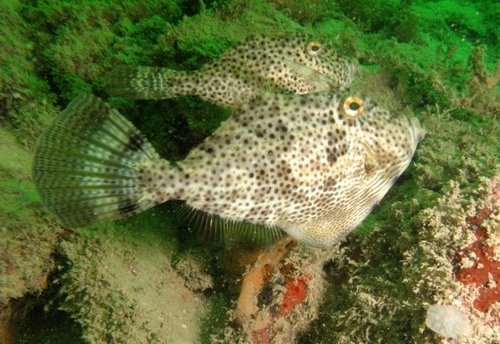
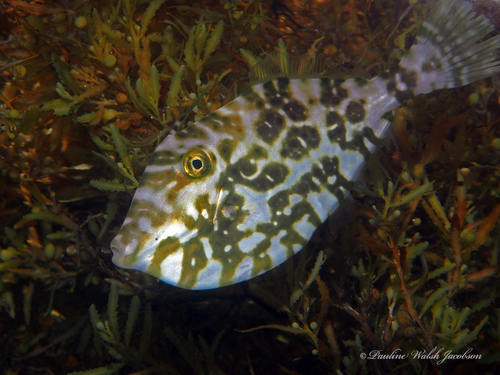
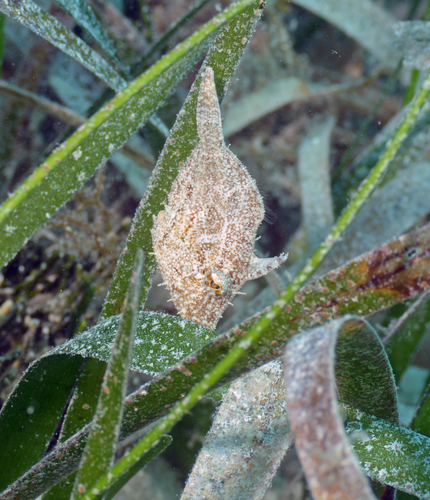
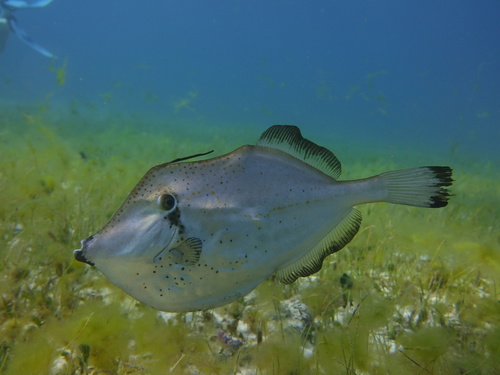
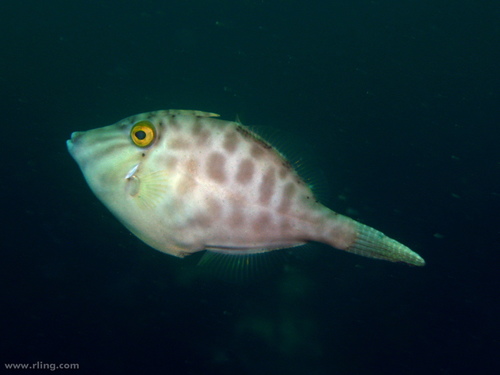
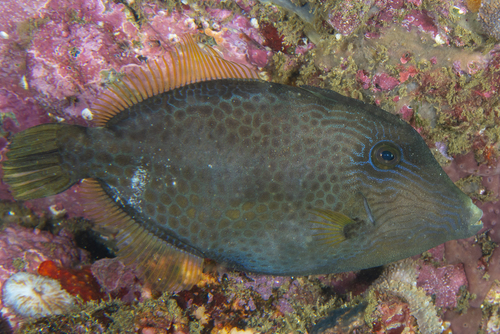
This species has three distinct basic color morphs: uniform dark brown, mottled grayish-brown, and a gray base color patterned with a network of fine polygonal markings.
Distinctive Markings
A distinct feature of the species is a prominent white spot at the rear base of the second dorsal fin, along with a second identical white spot at the rear base of the anal fin. This marking pattern is also shared by two closely related species: C. pullus, which lives on tropical Atlantic reefs, and C. sandwichiensis, which is native to Hawaii.
Habitat
Cantherhines pardalis inhabits tropical marine reef environments.
Depth Range
It is most commonly found at depths up to 20 metres (66 feet), though it may occasionally be found at deeper depths.
Behavior and Diet
This is a shy, reclusive fish that typically lives alone, and feeds on benthic organisms. Both juvenile and adult individuals will sometimes drift alongside aquatic plants and algae, including floating Sargassum rafts.