About Cantharellus formosus Corner
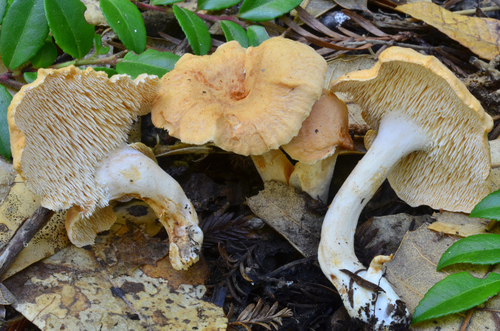
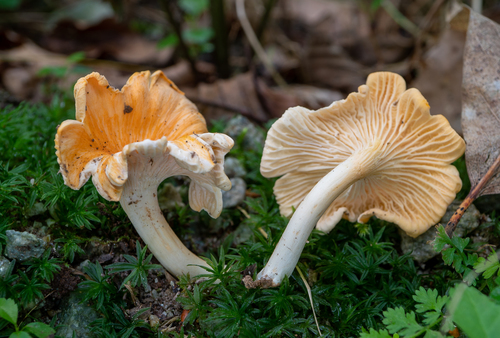
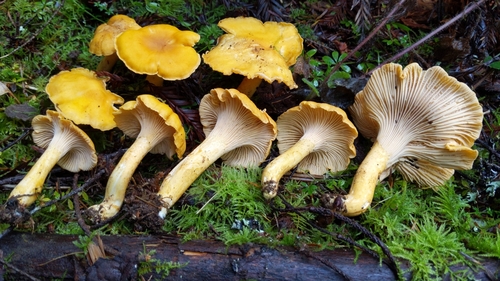
The fruiting bodies of Cantharellus formosus measure 2–15 cm (3⁄4–6 in) wide. Cap color changes based on light levels and weather conditions: in dry weather, caps are medium orange yellow to light yellow brown; in wet weather, caps brighten to brilliant or soft orange yellow; in low light, yellow pigment does not develop, leaving caps salmon to rosy buff. The false gills can be yellow, salmon, buff, or even whitish depending on conditions, and are usually paler than the cap. The stem shares the same color as the cap, and is either equal in width or tapers downwards. The spore print of this species is yellowish white. Cantharellus formosus has been found growing from British Columbia south to California, and is especially abundant in the conifer forests of Washington and Oregon. It forms mycorrhizal associations with Douglas-fir and western hemlock, and is more common in 40- to 60-year-old younger forests than in old-growth forests. It can grow solitary or in groups, and fruits from July to December. This mushroom has a mildly sweet odor and a mild taste. It should be brushed clean, not washed, before cooking. It can be used in tossed dishes, stir fries, and sautéed in butter or oil. It is commonly sold in grocery markets and served in restaurants, and is the most important commercially harvested Cantharellus species in the Pacific Northwest.