About Cantharellus californicus D.Arora & Dunham
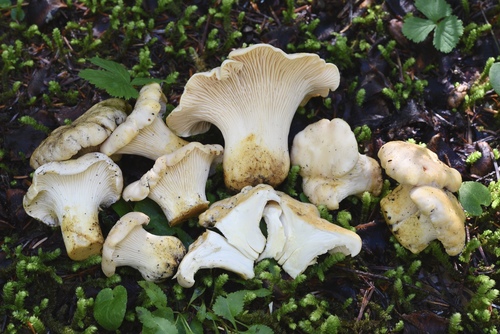
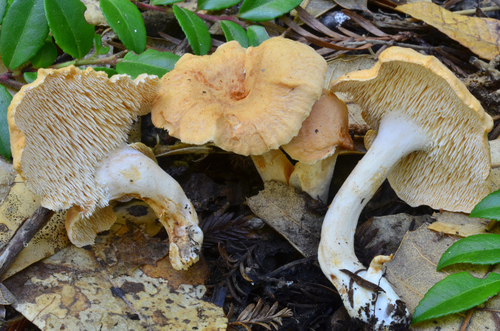
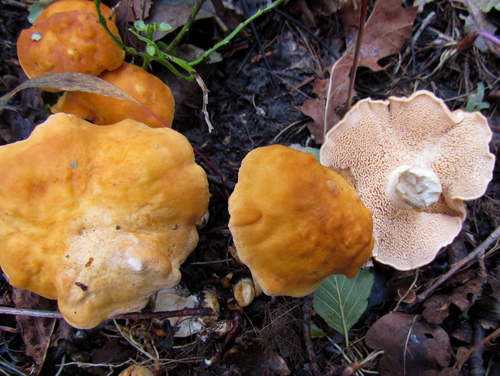
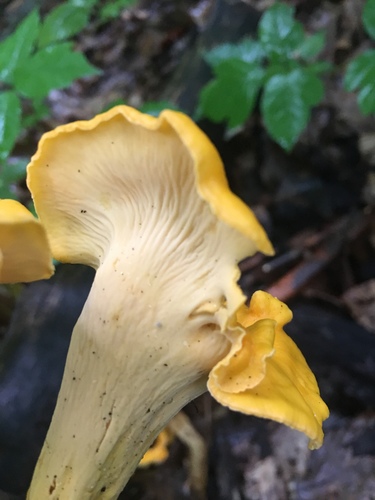
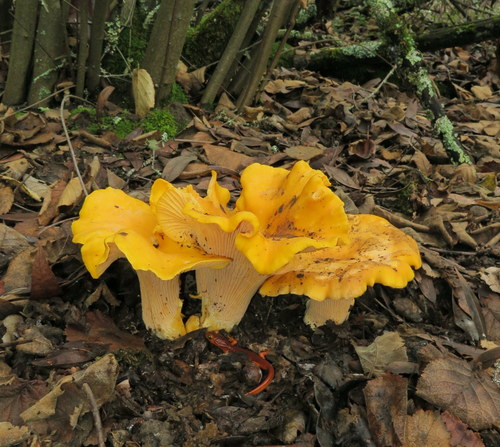
Cantharellus californicus, formally described as Cantharellus californicus D.Arora & Dunham, has a pileus (cap) that measures 5–30 centimetres (2–12 in) wide, and can exceptionally reach 50 cm (20 in) across. The cap is yellow-orange in color, though adhering leaf litter can create a mottled appearance, and it may turn brownish as the mushroom ages. The hymenium is folded into decurrent ridges called false gills, plus cross-veins that deepen as the mushroom ages. The ridges are usually a similar color to the cap, but paler. The stipe (stem) is 2–10 cm (3⁄4–4 in) long and 1–4 cm (1⁄2–1+1⁄2 in) wide, with the same coloration as the hymenium. Its spores are creamy yellow, elliptical, and smooth. Individual specimens have been recorded reaching up to 2 kilograms (4.4 lb), which makes C. californicus the largest known chanterelle species. Their unusual size is partially due to their ability for indeterminate growth, which allows C. californicus specimens to actively grow for much longer than most other mushrooms. In terms of distribution and habitat, Cantharellus californicus forms a mycorrhizal association with oaks, most commonly coast live oak in the woodlands of Coastal California. It has also been found growing in association with interior live oak, California black oak, canyon live oak, and tanoak, with possible associations with Pacific madrone and manzanita. C. californicus is a popular wild edible mushroom in the San Francisco Bay Area, and it is most common between the months of November and April.