About Camponotus vagus (Scopoli, 1763)
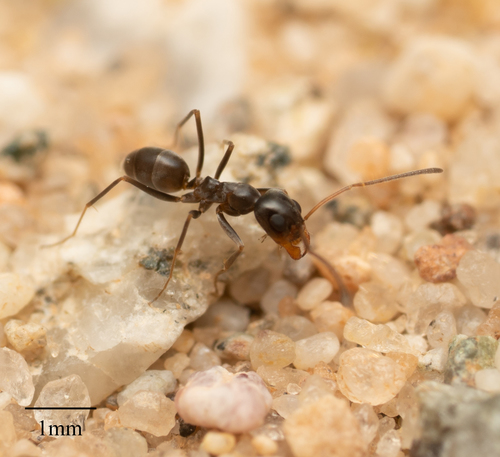
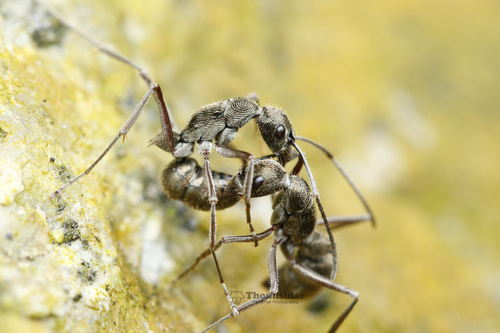
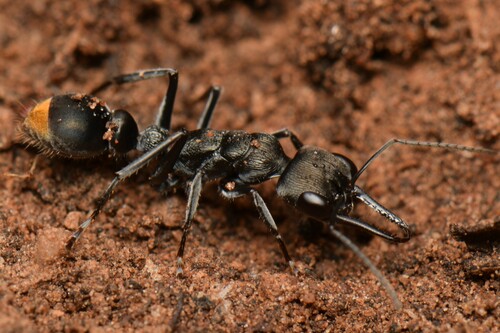
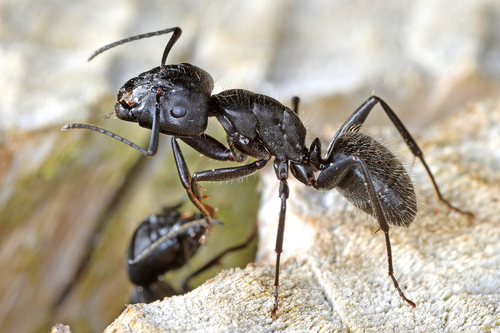
Camponotus vagus is a relatively distinct species that is easy to identify by its large size, uniform black coloration, and the long, dense hairs covering its exoskeleton. As a eusocial insect, individual ants exhibit continuous allometric variation in size and morphology, which supports task allocation and work partitioning within the colony. Worker ants of this species range from 6 to 12 mm in length. Larger "major workers" serve as colony guards, defending smaller "minor workers" when the minor workers leave the nest to forage. The strong mandibles of major workers can decapitate small arthropods collected for food and dismember smaller ants from other species. This species is especially common in central Europe, and its overall distribution extends from southern Scandinavia to northwestern Africa, and from Portugal to Altai, Mongolia. Records of C. vagus in northern Europe are scattered and isolated, and the species is more common further south. It is a rare, often overlooked species in Norway, which sits at the extreme edge of its range. There are few records of C. vagus in Sweden and Finland, and most of these records are outdated. Colonies of C. vagus are most often found in dry habitats, particularly open forests and forest edges. This species most commonly builds nests in dead wood, but colonies may also be established under stones. An average colony contains 1,000 to 4,000 workers, while the largest colonies can hold up to 10,000 individuals.