About Camponotus textor
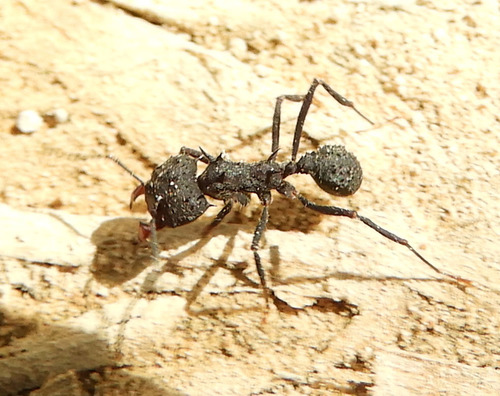
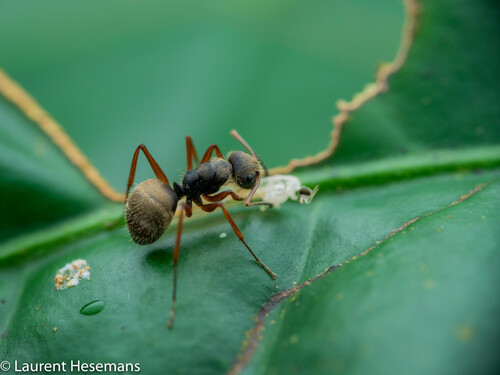
Camponotus textor, also called the Brazilian weaver ant, is a fairly common, tree-dwelling ant species native to South and Central America. This species is thought to contain multiple cryptic species. It was previously considered synonymous with the cavity-dwelling ant Camponotus senex, which is now classified as only distantly related to C. textor. In Brazil, C. textor nests can be found across a number of tree species, and C. textor is a dominant species in all areas where it occurs. When disturbed, these ants aggressively defend their nests. Worker ants produce a noticeable loud hissing sound by tapping the inside of their nests with their abdomens. C. textor goes through four larval instars during development, and pupates inside a cocoon. Mature larvae from the final larval instar produce the silk used to spin the ants' nests, while being held from behind by worker ants. These hairy, plump larvae have specialized hairs on their backs; these hairs have anchor-like projections at their tips, which are thought to help the larvae attach to the walls of the nest. C. textor is the only species in the genus Camponotus recorded to have traces of alkaloids in its venom.