About Campaea margaritaria (Linnaeus, 1761)
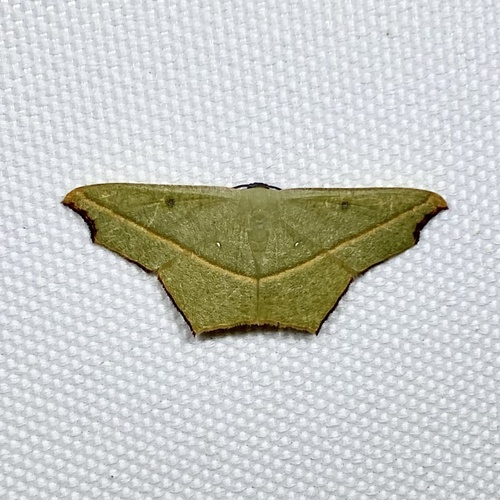
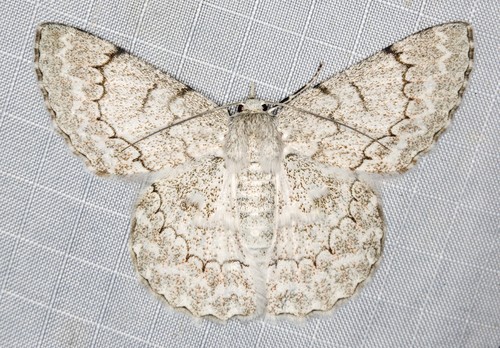
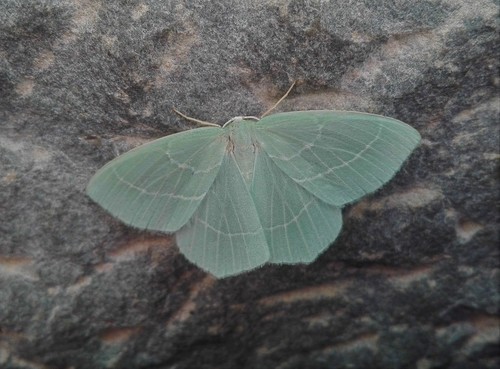
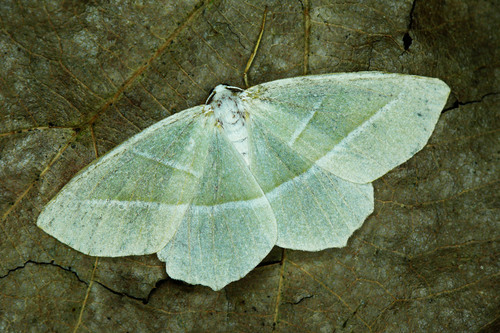
Description: When adults first emerge, they have delicate pale green wings marked with green and white fascia. There are two of these fascia on the slightly crenulate forewing, and one on the hindwing. Like most moths with this green coloration, the green pigment is fugitive and fades over time. Older specimens usually become almost completely pure white. The wingspan of this moth ranges from 42 to 54 millimeters, and females are generally considerably larger than males. The eggs of Campaea margaritaria are smooth and long oval in shape, and are laid with the micropyle positioned at the top. When first laid, they are light grey with dark dots; later, they turn pink and their dots become deep red. The larvae are grey, brown, or brownish-green, and commonly have whitish dots. Their segment incisions are clearly well marked. Life cycle: This species produces one or two broods each year, and adults can be seen anytime between July and September. Larvae feed on a variety of deciduous trees, including apple, beech, birch, elm, hawthorn, hazel, and oak, as well as multiple species in the genus Prunus. The species overwinters in the larval stage, and feeds on the soft bark of its food plants during winter. Adult moths fly at night and are attracted to light. The flight season given here refers to populations in the British Isles, and may differ in other parts of the species' range.