About Camellia sinensis (L.) Kuntze
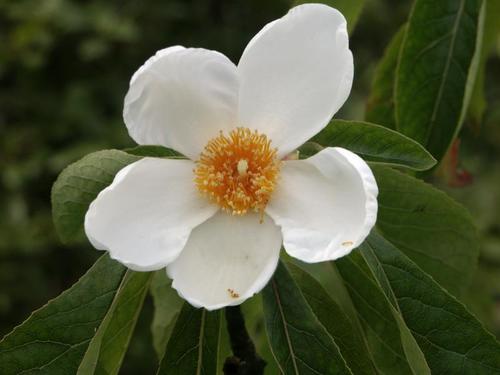
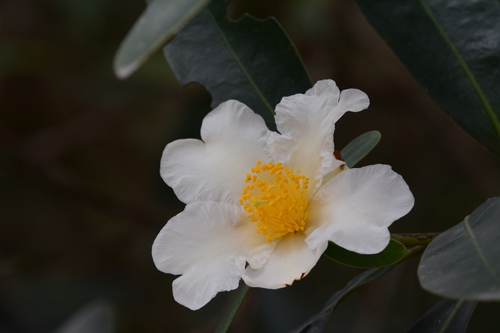
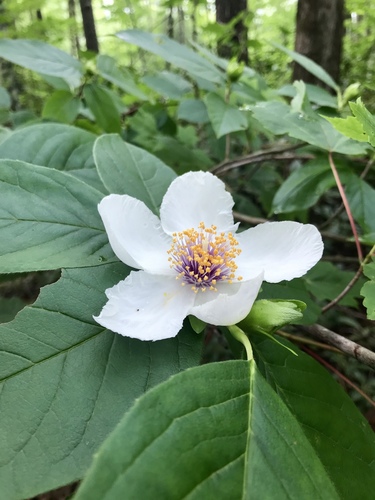
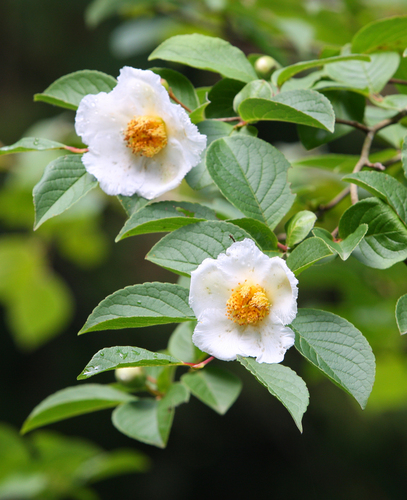
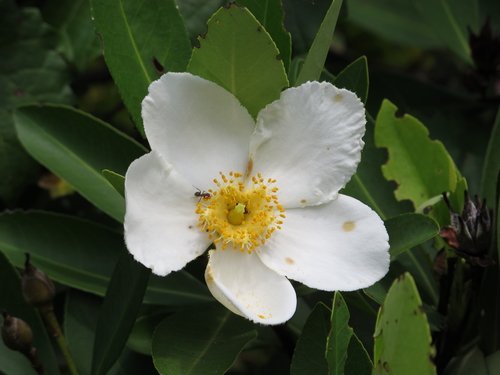
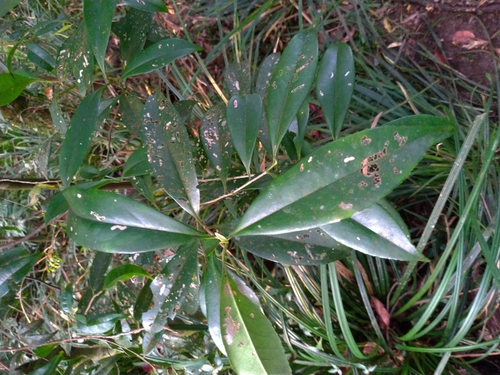
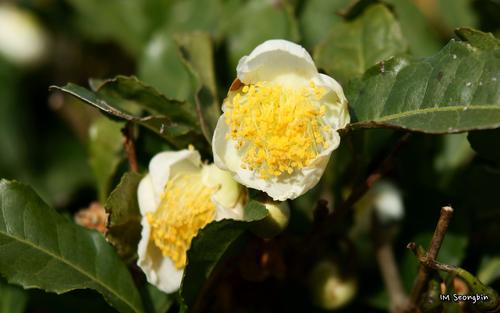
Camellia sinensis (L.) Kuntze is a woody species that grows as either a shrub or a tree. It typically reaches 1 to 5 meters (3.3 to 16.4 feet) in height, though it can grow as tall as 20 meters (66 feet). When grown in commercial tea plantations, it is usually trimmed to a height of around 1 meter (3.3 feet) and trained to have a flat top. The bark of its trunk is smooth and gray, with subtle yellow or brown undertones. Young branches are yellow with a gray tint, while new twigs are red-purple and covered in white hairs. On mature, older trees, the trunk can grow up to 40 centimeters in diameter. Seedlings develop a dominant taproot, but the root structure of mature plants depends on individual plant traits and growing conditions: in areas with shallow soil or a high water table, tea bushes develop a shallow, fibrous root system, while plants growing in deep soil can have roots reaching depths of 5.5 meters. Tea bushes reach peak productivity between 30 and 50 years of age, but can remain productive for more than 100 years. The leaves of Camellia sinensis are green, and cultivated plants typically have smaller leaves than wild specimens. Leaves range from 4 to 22 centimeters (1.5 to 8.5 inches) long and 2 to 7.7 centimeters (0.8 to 3.0 inches) wide. They are elliptic, oblong-elliptic, or oblong in shape, with a leathery texture. The upper leaf surface is glossy dark green and hairless, while the underside is pale green and may be hairless or pubescent (covered in fine plant hairs). Both the central vein and the 7 to 9 smaller veins branching out on each side of it are raised above the leaf surface on both sides of the leaf, and the smaller netlike veins between these are also visible. The leaf tip has a wide angle, and the leaf edges are serrate to serrulate, ranging from asymmetrical forward-pointing teeth to very fine serrations. The flowers are white, 2.5 to 3.5 centimeters (1 to 1.5 inches) across, with 6 to 8 petals. They develop from buds in leaf axils, growing either singly or in clusters of up to three flowers. The back of each flower has five sepals that are 3 to 5 millimeters long. One to three of the petals are somewhat sepal-like and hidden behind the five visible petals at the front of the flower. The center of the flower is filled with numerous hairless stamens 8 to 13 millimeters long, arranged in up to five concentric circles called whorls. The fruit is a globular capsule, usually flattened at the ends, measuring 1 to 1.5 centimeters from top to bottom and 1.5 to 3.5 centimeters in diameter. Each fruit has 1 to 3 rounded chambers, holding 1 or 2 seeds per chamber. The seeds are brown to nearly black, and shaped like spheres, half-spheres, or have multiple flat faces. They measure 1 to 1.6 centimeters across and are hairless. The origin of the tea plant is obscured by its very long history of cultivation, and its natural native range is not confirmed. It is generally agreed the species is native to East Asia, though experts debate the exact location of its origin. One theory suggests it originated in the borderlands of far eastern India, northern Myanmar, and southwestern China. Other experts argue it originated in the more northeastern Chinese province of Yunnan. The Plants of the World Online database lists a broader native range that includes southcentral and southwest China, Assam and the eastern Himalayas in India, Myanmar, Laos, Thailand, and Vietnam. Camellia sinensis is mainly cultivated in tropical and subtropical climates, in regions that receive at least 127 centimeters (50 inches) of rainfall per year. Tea plants prefer rich, moist growing sites in full to partial sun, and can be grown in USDA hardiness zones 7 through 9. Despite this preference, the species is commercially cultivated from the equator as far north as Scotland; the northernmost commercial tea plantation is located at 59°N latitude on Shapinsay in the Orkney Islands. Many high-quality teas are produced from plants grown at high elevations, up to 2,200 meters (7,200 feet), as the plants grow more slowly in these conditions and develop a stronger flavor. If left unpruned, tea plants will grow into full-sized trees, but cultivated plants are pruned to around waist height to make leaf plucking easier. Two main varieties are used for cultivation: the small-leaved Chinese variety (C. s. var. sinensis) and the large-leaved Assamese variety (C. s. var. assamica), which is mainly used to produce black tea. Tea trees can remain productive for many years.