About Calyptra minuticornis (Guenée, 1852)
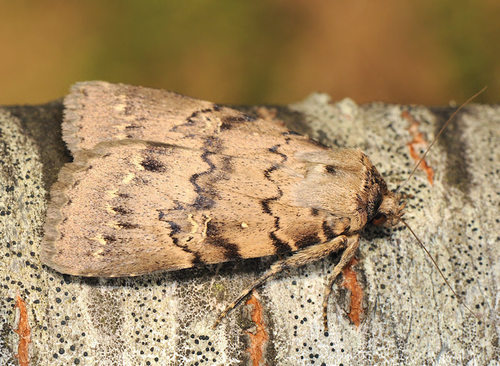
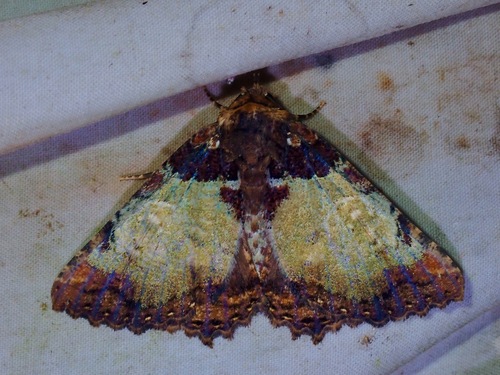
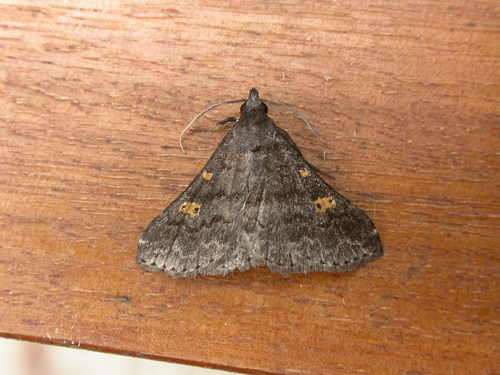
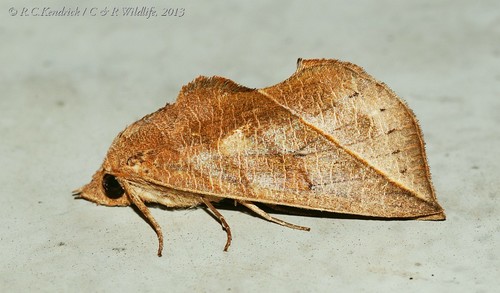
Calyptra minuticornis (Guenée, 1852) has a wingspan of approximately 50 millimeters. The antennae of male individuals are minutely ciliated. Its forewings have a rounded outer margin. The head and thorax are pale reddish brown, and are thickly covered with grey irroration. The abdomen is pale fuscous. Forewings are pale red-brown with a silvery sheen and numerous fine pale striae. Traces of sub-basal, antemedial, and medial oblique lines are present. A rufous line runs from the apex to the inner margin beyond the middle of the wing. A series of submarginal specks is also present. Hindwings are pale fuscous, and the cilia are whitish. The larva is olive-grey, with a sub-dorsal series of black-bordered yellow spots. It has a sub-lateral series of specks, which are enclosed from the fourth somite by a pinkish-bordered black line. The larval head is ochreous, with paired lateral black spots, and larval legs are pale pink. The caterpillar of this species feeds on Stephania japonica, and species from the genera Cissampelos, Cocculus, and Cyclea. It pupates inside a cocoon located between joined dead leaves in ground debris. Adult Calyptra minuticornis are fruit piercers, and have also been observed piercing the skins of buffalo, zebu, tapir, and even humans in laboratory settings to suck blood.