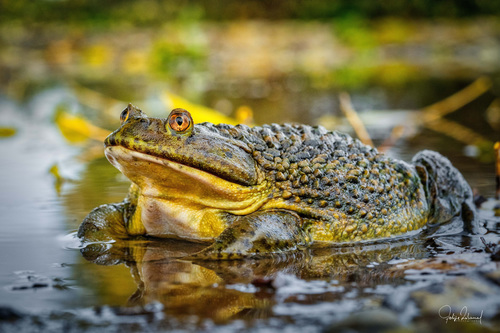
About Calyptocephalella gayi (Duméril & Bibron, 1841)
General Description
The helmeted water toad, Calyptocephalella gayi, is a robust species with a broad head and large mouth.
Adult Size
It reaches a very large size: up to 15.5 cm (6.1 in) in snout–to–vent length for males, and up to 32 cm (12.6 in) for females. Its typical maximum weight ranges from 0.5–1 kg (1.1–2.2 lb), though exceptionally large individuals can reach 3 kg (6.6 lb).
Modern Size Records
Such very large individuals are essentially unheard of in modern times, but there are recent records of several individuals weighing 1.2–1.3 kg (2.6–2.9 lb).
Regional Size Ranking
It is the largest anuran (frog and toad) species found in the Americas, out-sizing other large species including Blomberg's toad, cane toad, Colorado River toad, cururu toad, smooth-sided toad, American bullfrog, Lake Junin frog, mountain chicken frog, and Titicaca water frog.
Global Size Comparison
Its maximum snout–to–vent length is similar to that of the world's largest frog, the African goliath frog (Conraua goliath), though the goliath frog can reach a higher weight.
Adult Coloration
Adult helmeted water toads have base colors of yellow, brown and green; mature specimens are typically light green, while the oldest individuals are gray or have gray patches on a dark background.
Tadpole Size and Color
Their tadpoles, which are olive-brown to dusky in color, also grow to an unusually large size: they typically exceed 10 cm (3.9 in) in length and can reach up to 15 cm (5.9 in).
Breeding Season
Helmeted water toads breed in Southern Hemisphere spring, between September and October, when males produce breeding calls.
Egg Laying
Females lay between 1,000 and 16,000 eggs in shallow, well-vegetated water.
Egg Hatching Success
Although many eggs do not hatch, captive studies show a single spawning can produce more than 1,000 tadpoles.
Larval Stage Duration
Typical larval (tadpole) stage lasts five months to one year, and can last up to two years.
Larval Survival Requirements
After hatching, larval survival depends on the presence of vegetation and water movement that maintains good oxygen levels.
Hatching Habitat Needs
Seasonal ponds with some degree of drainage are essential for hatching, because these sites have fewer predators that target the larvae.
Larval Movement Benefits
Transport of larvae from these ponds to larger bodies of water during rains, and movement of larvae between multiple water bodies, improves survival and supports healthy population development.
Larval Habitat Preferences
Unlike toad larvae that share the same habitats and have higher pigmentation to protect them from solar radiation, helmeted water toad larvae prefer cooler sections of water bodies and rely on protective aquatic vegetation.
Post-Metamorphosis Behavior
While the species is almost entirely aquatic, young recently metamorphosed helmeted water toads can often be seen on land.
Breeding Age
In captivity, individuals can reach breeding age at 2 years old, and one female has been recorded breeding successfully at 24 years old.
Aggressive Behavior
The helmeted water toad is quite aggressive, and produces a specific aggressive call directed at other members of its own species.
Conspecific Encounter Displays
During encounters with conspecifics, they inflate their body, open their large mouth, and may jump forward toward an opponent.
Predator Response
This same behavior can also be used against potential predators including humans, though the toads may instead choose to escape silently by diving into deeper water.


