About Caltha leptosepala DC.
Growth Form
Caltha leptosepala DC. is a perennial herb. It produces a mostly leafless stem, with all leaves growing at the base of the plant.
Basal Leaf Characteristics
Basal leaves can reach up to 13 to 15 centimeters (5 to 6 inches) in length, and their edges may be smooth, wrinkled, or toothed.
Inflorescence Structure
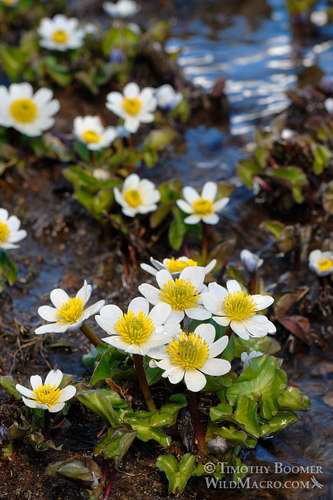
The inflorescence holds one or more individual flowers. Each flower measures 1 to 4 centimeters (1/2 to 1 1/2 inches) wide.
Flower Perianth
It has no true petals, instead featuring petal-like sepals that are most often white, but sometimes yellow.
Flower Reproductive Parts
The center of the flower contains many long, flat stamens and a smaller number of pistils.
Species Range
This species is native to western North America, ranging from Alaska to New Mexico.
General Habitat
It grows in wet mountain habitats in alpine and subalpine regions, thriving in moist to wet soils in partial shade.
Specific Habitat Types
Its native habitats include wet alpine areas, subalpine meadows, stream edges, and bogs.
Toxicity and Herbivory
The leaves of Caltha leptosepala contain toxic alkaloids, but elk still eat them.
Traditional Human Use
Some indigenous peoples of Alaska traditionally ate the plant's leaves and flower buds.