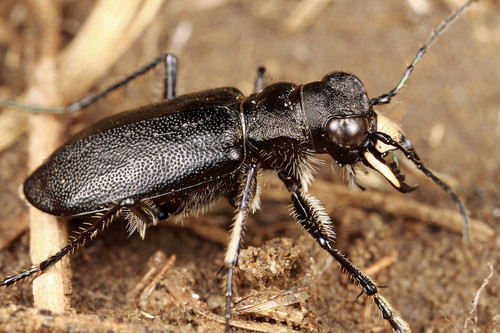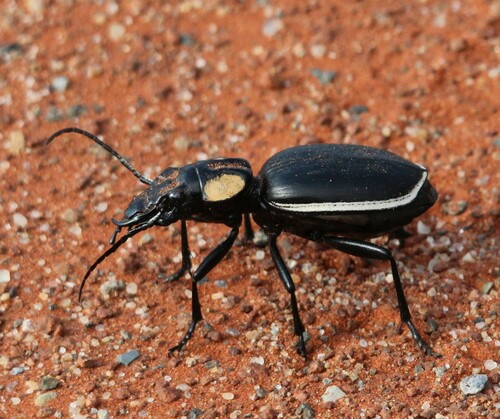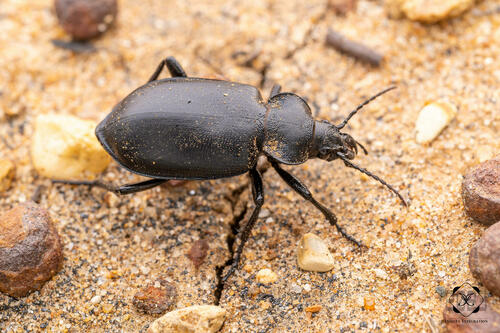
About Calosoma semilaeve LeConte, 1852
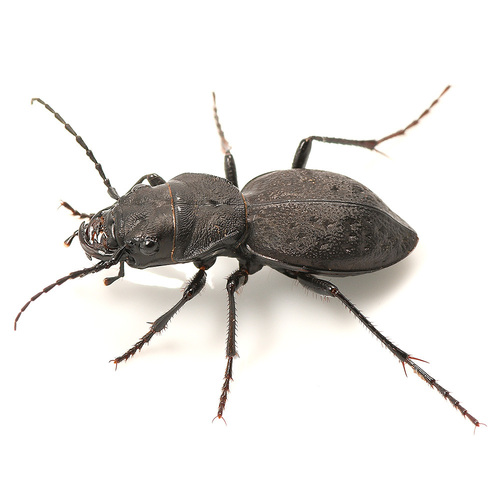
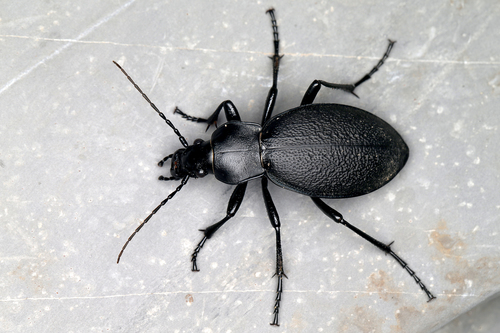
Calosoma semilaeve, commonly called the black calosoma or semi-smooth beautiful black searcher, is a species of ground beetle belonging to the subfamily Carabinae. It was formally described by John Lawrence LeConte in 1852, and its scientific authority matches this 1852 publication year. This species occurs in Baja California, Mexico, and in the U.S. states of Arizona, California, Idaho, Oregon, and Utah. It lives in cultivated fields and along roadsides. Adult beetles are active both during the day and at night, and they hunt a range of prey: caterpillars (including caterpillars of Peridroma saucia and Malacosoma incurvum), along with tenebrionid, elaterid, and other carabid beetles. Adult Calosoma semilaeve overwinter inside underground cavities.