About Calosoma sayi Dejean, 1826
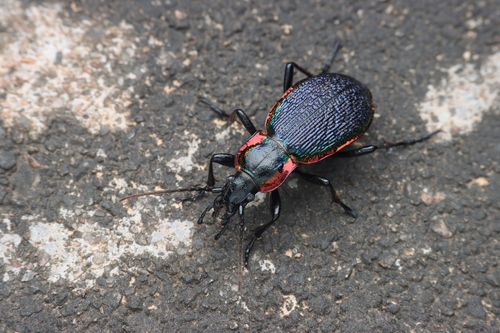
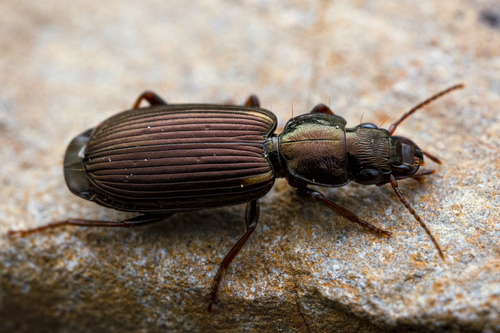
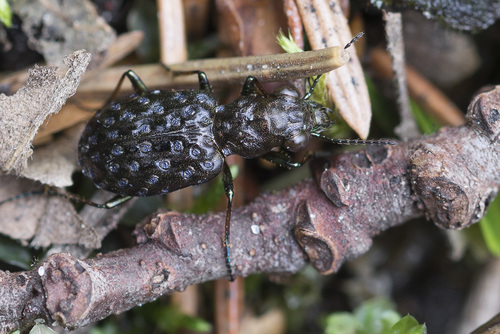
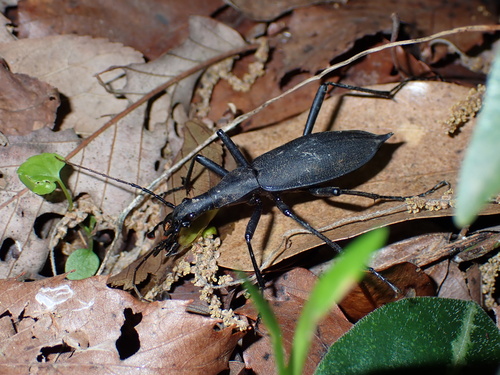
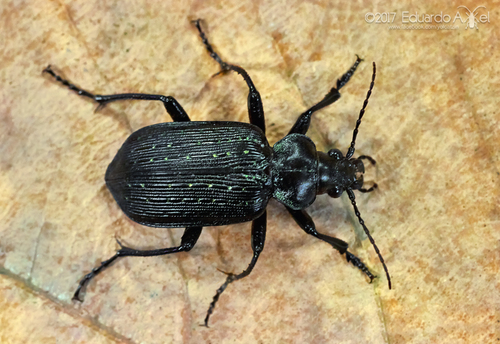
Calosoma sayi, commonly called Say's caterpillar hunter or the Black Caterpillar Hunter, is a species of ground beetle belonging to the subfamily Carabinae. This species was first described by Pierre François Marie Auguste Dejean in 1826. It is a large, shiny black beetle that occurs across the United States, and its typical habitat includes fields and disturbed areas. Adults measure between 25mm and 28mm in length. Its grooved elytra feature rows of metallic pits or dots; these pits are smaller than the pits found on many other species in the Calosoma genus, and are ruby red. Both adult and larval Calosoma sayi prey on the larvae and pupae of other insects, specifically those of grubs, flies, and lepidoptera. These beetles roam through forests, grasslands, and other areas to search for food, which primarily consists of caterpillars and other invertebrates. They are fast runners that use their long legs to cover large areas of ground and escape from predators. They are generally nocturnal hunters, and will hide under stones, leaves, or wood during the day.