About Calophyllum inophyllum L.
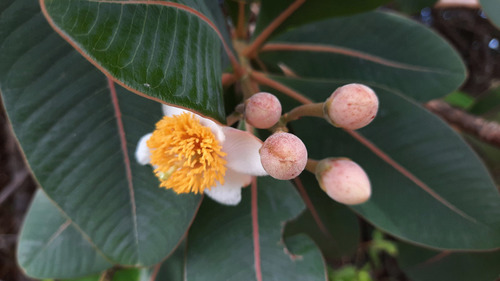
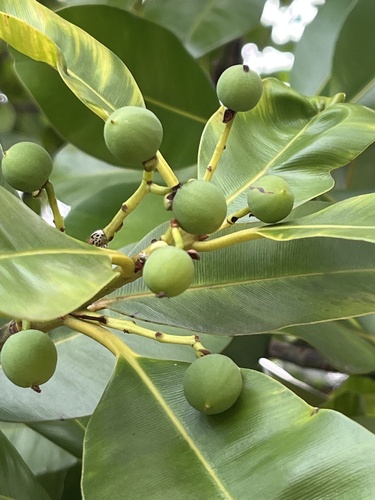
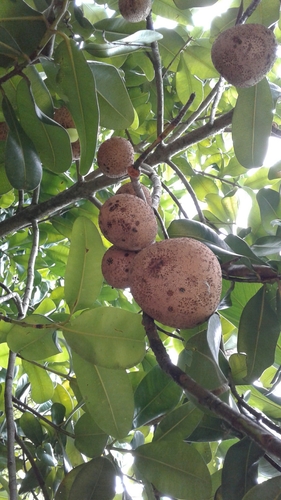
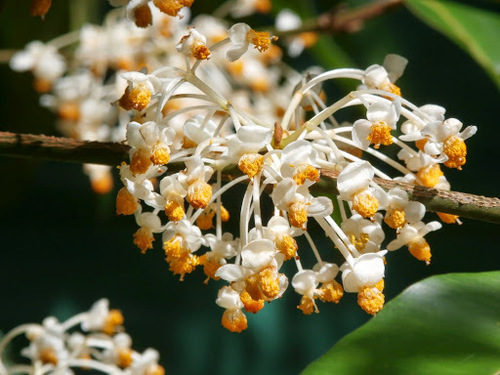
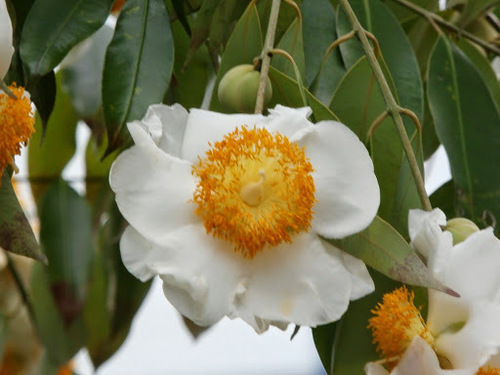
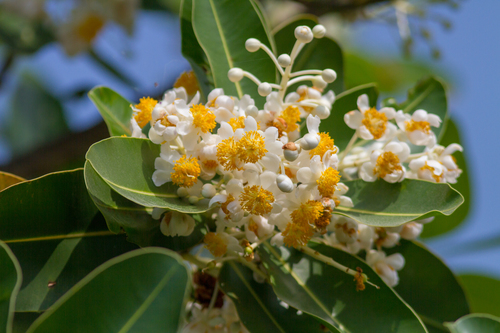
Calophyllum inophyllum L. is a large evergreen tree, commonly known by multiple common names including tamanu, oil-nut, mastwood, beach calophyllum, and beautyleaf. It is native to the Old World Tropics, ranging from Africa through Asia to Australia and Polynesia. Prehistoric migrations of Austronesian peoples spread this species, alongside other members of the Calophyllum genus, across the islands of Oceania and Madagascar due to its value as timber for constructing large traditional outrigger ships. It has since become naturalized along parts of the East African coast, and is also the source of culturally significant tamanu oil.
Following the World Geographical Scheme for Recording Plant Distributions, its native range covers: East Tropical Africa (Kenya, Tanzania); South Tropical Africa (Mozambique); Western Indian Ocean (Aldabra, Chagos Archipelago, Comoros, Madagascar, Mauritius, Mozambique Channel Islands, Rodrigues, Réunion, Seychelles); China (Hainan); Eastern Asia (Kazan-retto, Nansei-shoto, Ogasawara-shoto, Taiwan); Indian Subcontinent (Bangladesh, India, Laccadive Islands, Maldives, Sri Lanka); Indo-China (Andaman Islands, Cambodia, Laos, Myanmar, Nicobar Islands, South China Sea region, Thailand, Vietnam); Malesia (Borneo, Christmas Island, Cocos (Keeling) Islands, Jawa, Lesser Sunda Islands, Malaya, Maluku, Philippines, Sulawesi, Sumatera); Papuasia (Bismarck Archipelago, New Guinea, Solomon Islands); Australia (Queensland); North-Central Pacific (Hawaii); Northwestern Pacific (Caroline Islands, Marianas, Marshall Islands); South-Central Pacific (Cook Islands); Southwestern Pacific (Fiji, Gilbert Islands, Nauru, New Caledonia, Niue, Samoa, Santa Cruz Islands, Tokelau-Manihiki, Tonga, Tuvalu, Vanuatu, Wallis-Futuna Islands). It has been introduced to Florida, parts of Central America, the Caribbean, and western Africa, and is now widely cultivated across all tropical regions of the world. Valued for its decorative leaves, fragrant flowers, and spreading crown, it is most widely known as an ornamental plant. This tree most often grows in coastal regions and adjacent lowland forests, but can be successfully cultivated in inland areas at moderate altitudes. It tolerates a wide variety of soil types, including coastal sand, clay, and even degraded soil.
Beyond its historical use for shipbuilding timber, tamanu oil extracted from the tree's fruit kernels holds cultural importance in Polynesian culture. Both tamanu oil and poultices made from the species' leaves and flowers are commonly used in traditional medicine. The leaves contain compounds that are poisonous to fish, and have been used as fish poison. The tree's sap is poisonous, and is used to make poison arrows in Samoa. Mature fruit of the tree is toxic enough to be used as rat bait. To process the nuts for oil, they are dried before cracking, after which the oil-rich kernel is removed and dried further. In 1951, the first neoflavone isolated from natural sources, calophyllolide, was obtained from C. inophyllum seeds. The Mavilan, a Tulu-speaking tribe in north Kerala, India, use the tree's bark to make a powder that is mixed with water and applied to plants affected by a water-borne plant disease the community calls neeru vembu. Fatty acid methyl esters derived from C. inophyllum seed oil meet the primary biodiesel standards of the United States (ASTM D 6751) and the European Union (EN 14214). Average oil yield is 11.7 kg of oil per tree, or 4680 kg of oil per hectare. In the northwest coastal areas of Luzon Island, Philippines, the oil was historically used to fuel night lamps. This widespread use declined after kerosene became available, and declined further with the spread of electricity. The oil was also used as fuel to generate electricity to power radios during World War II. Extracts of C. inophyllum contain sesquiterpenoids, triterpenoids, fatty acids, and fatty acid derivatives.