About Calodendrum capense (L.fil.) Thunb.
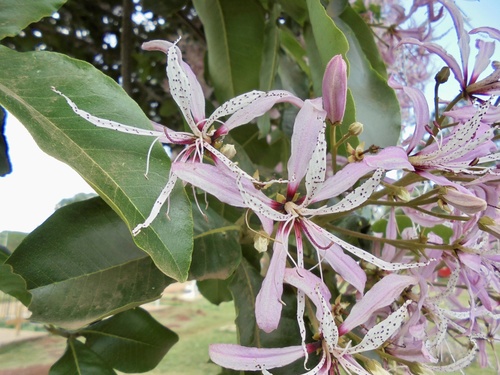
Calodendrum capense, commonly known as the Cape chestnut, is an African tree that was first studied at the Cape in South Africa. It is widely cultivated for its abundant, showy flower display. Explorer William Burchell gave the tree its common name because he noted a resemblance between the Cape chestnut and the horse chestnut in both flowers and fruit, despite the two species not being closely related. This tree is native to an area along the eastern side of the African continent. Its northern limit reaches the equatorial highlands of Kenya; from there it extends south through isolated mountains in Tanzania, to both sides of Lake Malawi, the Mashonaland Plateau and Eastern Highlands of Zimbabwe, then along the lower slopes of South Africa's Drakensberg Mountains and in coastal forests ranging from Gqeberha to Cape Town. Oil obtained from the seeds of Cape chestnut, also called Yangu oil, is a popular oil used in African skin care. Its natural ultraviolet protection, high content of essential fatty acids and antioxidants, and mild odour make it well suited for use in natural cosmetics. Birds and monkeys eat the tree's seeds.