About Calluna vulgaris (L.) Hull
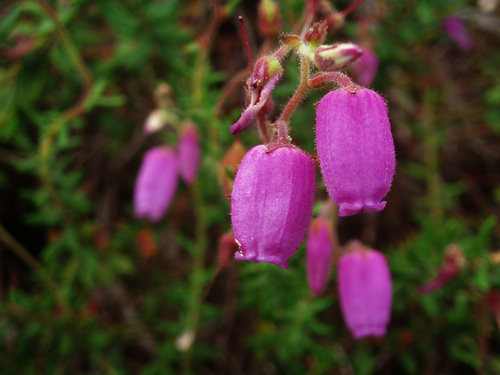
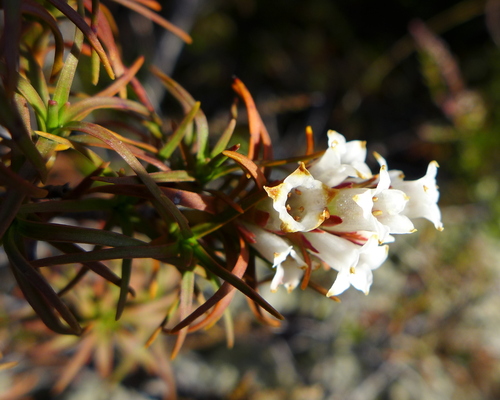
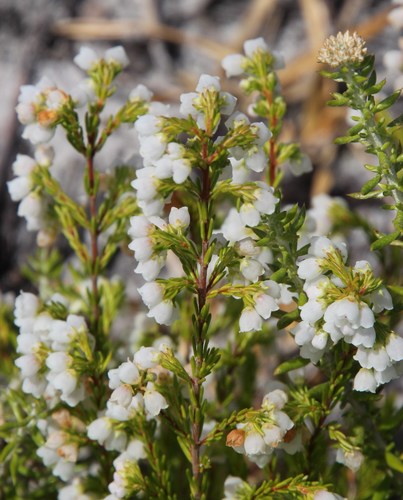
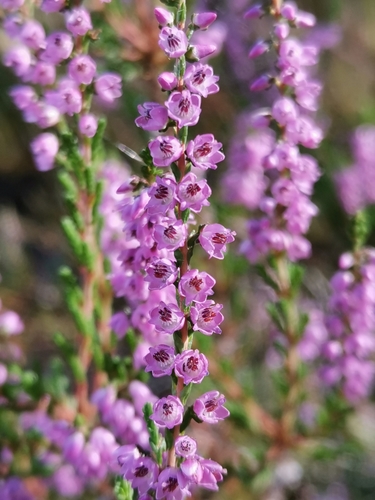
Calluna vulgaris, commonly known as heather, can grow up to 60 centimetres (24 inches) tall. It has small scale-like leaves that are less than 2–3 mm long, arranged in opposite decussate pairs. By contrast, leaves of the related genus Erica are generally larger, arranged in whorls of 3–4, and sometimes 5. Calluna flowers from July to September. Flowers of wild plants are normally mauve, but white-flowered individuals occur occasionally. The flowers are arranged in terminal racemes, with sepal-like bracts at the base and a superior ovary, and the fruit is a capsule. Unlike Erica, Calluna sometimes produces double flowers. It is sometimes called Summer or Autumn heather, to distinguish it from winter or spring flowering Erica species. Calluna vulgaris is native to Europe, Iceland, the Faroe Islands, and the Azores. It has been introduced to many other regions around the world with suitable climates, including North America, Australia, New Zealand and the Falkland Islands. It is extremely cold-hardy, and survives severe exposure and freezing conditions well below −20 °C (−4 °F). Heather is an important food source for various sheep and deer, which graze the tips of the plants when snow covers low-growing vegetation. Willow grouse and red grouse feed on this plant's young shoots and seeds. Both adult and larval heather beetles (Lochmaea suturalis) feed on Calluna, and can cause extensive plant mortality in some cases. The larvae of many Lepidoptera species also feed on the plant, most notably the small emperor moth Saturnia pavonia. Historically, heather was used to dye wool yellow and tan leather. Mixed with malt, heather was an ingredient in gruit, a blend of flavourings used to brew heather beer in the Middle Ages before hops became common. In 1769, Thomas Pennant wrote in A Tour in Scotland that ale on the Scottish island of Islay was frequently made from young heath tops, mixing two parts heather with one part malt, and sometimes adding hops. A recipe for "Heath Beer" appears in the recipe book compiled by Lady Ann Fanshawe starting in 1651. Since early history, heather has been used to make besoms. This practice is referenced in the song "Buy Broom Buzzems", likely written by William Purvis (Blind Willie) of Newcastle-upon-Tyne, England, who lived from 1752 to 1832. Heather honey is a highly valued product in moorland and heathland areas, and many beehives are moved to these areas in late summer. It was not always as highly regarded as it is today; Dioscurides dismissed it as mel improbum, "unwholesome honey". Heather honey has a characteristic strong taste, and an unusual thixotropic texture: it is jelly-like until stirred, becomes a syrup like other honey when stirred, then sets back into a jelly. This texture makes extracting the honey from combs difficult, so it is often sold as comb honey. In Scotland, white heather is considered lucky. This tradition was brought from Balmoral to England by Queen Victoria, and sprigs of white heather are often sold as good luck charms and incorporated into bridal bouquets. A small industry in Scotland uses heather stalks as a raw material to make sentimental jewellery. The stalks are stripped of their bark, dyed bright colours, then compressed with resin. In traditional Austrian medicine, Calluna vulgaris herb is used internally as a tea to treat disorders of the kidneys and urinary tract.