About Callosciurus erythraeus (Pallas, 1779)
Scientific Classification and Size Category
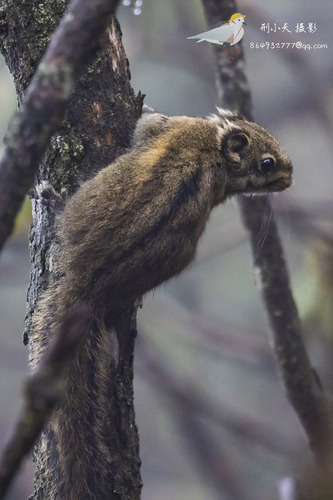
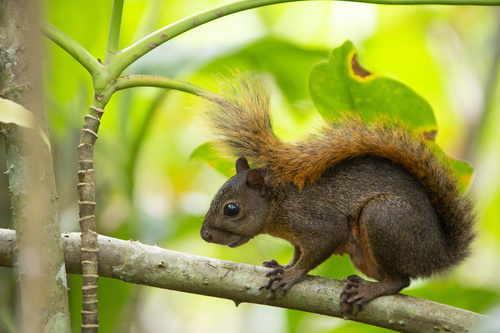
Pallas's squirrel, scientifically Callosciurus erythraeus (Pallas, 1779), is a medium-sized tree squirrel.
Body and Tail Length
It has a head-body length of 16 to 28 cm (6.3 to 11.0 in), and a tail between 11 and 26 cm (4.3 to 10.2 in) long.
Weight and Sexual Dimorphism
Males and females have similar size and appearance, and both weigh between 310 and 460 g (11 and 16 oz).
Subspecific Pelt Variation
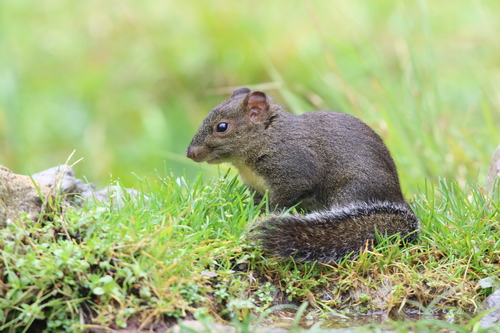
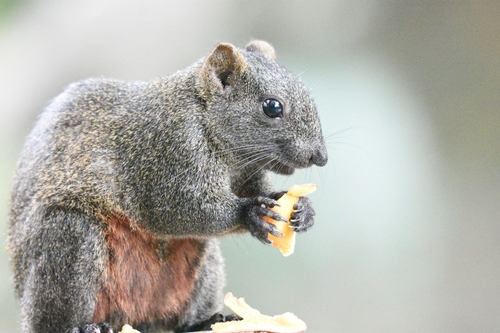
Pelt color varies significantly across its many different subspecies.
General Coloration
Generally, the upper body is brownish, the belly has a more reddish tint, and the tail often has some black markings.
Fur Pattern Taxonomic Utility
Precise fur patterns and shades are commonly used to tell subspecies apart, but this high variation makes it hard to distinguish the entire species from other similarly variable tree squirrel species.
Native Range
Pallas's squirrel is native across much of southeastern Asia.
Native Range Specific Countries
Its native range includes far eastern India, Bhutan, northern and eastern Myanmar, Vietnam, parts of Cambodia and Laos, most of Thailand, northern peninsular Malaysia, Taiwan, and southern and eastern China including Hainan.
Native Habitat
Within its native range, it lives in a variety of forest habitats below 3,000 m (9,800 ft) elevation, including tropical and subtropical evergreen forests, deciduous broadleaf woodlands, and subalpine conifer woodlands.
Introduced Regions
Populations of Pallas's squirrel have been introduced to Buenos Aires Province in Argentina, Dadizele in Belgium (where it was first misidentified as Père David's rock squirrel), the Netherlands, Cap d'Antibes in France, and Japan.
Invasive Status Impacts
In these introduced regions, it is classified as an invasive species, because it can cause substantial damage to trees and may outcompete native wildlife such as the red squirrel.
EU Invasive Listing
In 2016, this species was added to the European list of Invasive Alien Species of Union concern, also called the Union list.
EU Listing Restrictions
This listing means the species cannot be imported, bred, transported, commercialized, or intentionally released into the environment anywhere in the European Union.