About Callistemon pityoides Miq.
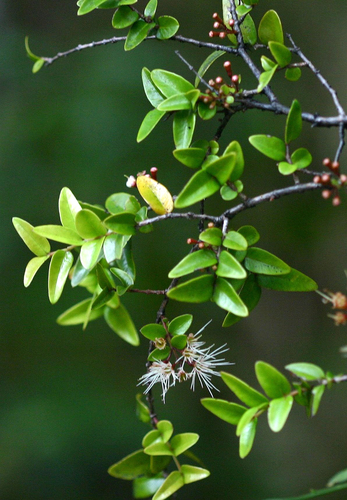
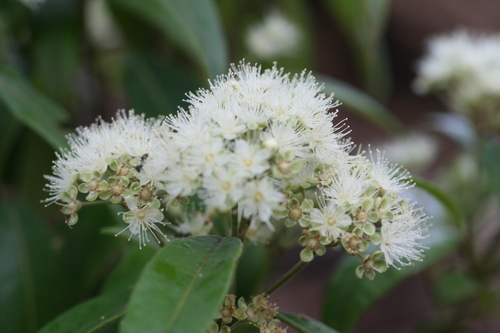
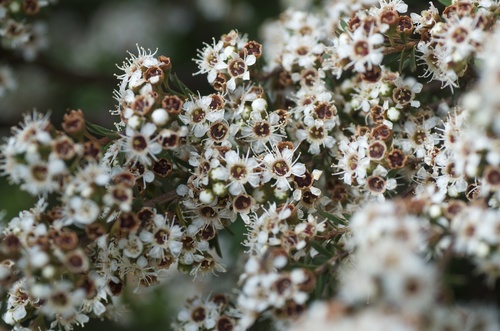
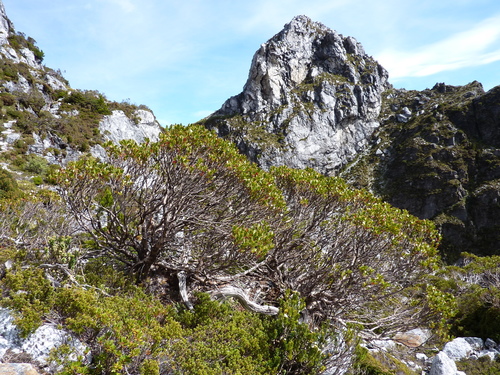
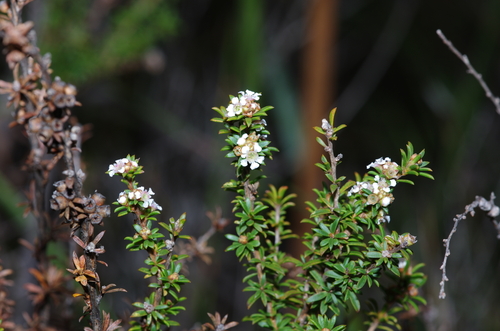
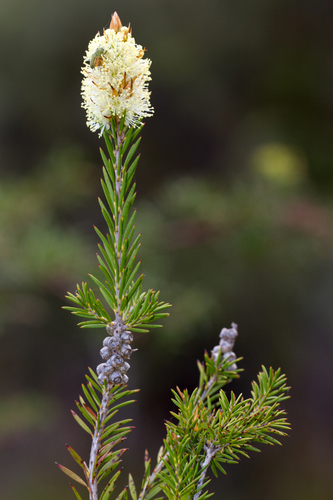
Melaleuca pityoides (also known as Callistemon pityoides Miq.) is a shrub that reaches 3 meters (10 feet) in both height and width, with hard grey bark. Its leaves are arranged alternately along the stems, measuring 12–24 mm (0.5–0.9 in) long and 0.5–2.5 mm (0.02–0.1 in) wide. The leaves are flat to almost cylindrical in cross-section, shaped as very narrow elliptic to egg-shaped, and end in a sharp point. Leaf veins and oil glands are not easily distinguishable, and young leaves and branches are often densely covered in silky hairs. The flowers are golden-yellow to cream, sometimes with a pink or green tinge, arranged in short spikes at the ends of branches that continue growing after flowering. The flower spikes are 18–25 mm (0.7–1 in) in diameter and 100 mm (4 in) long, holding 10 to 15 individual flowers. The petals are 2.1–3.4 mm (0.08–0.1 in) long, and fall off as the flower ages. Each flower contains 32 to 52 stamens. Flowering occurs from October to February, and sometimes takes place in other months of the year. Flowering is followed by the development of fruit that are woody capsules, 3.2–5.1 mm (0.1–0.2 in) long. This melaleuca species is distributed from the Border Ranges district in far southeastern Queensland, southwards through the Northern, Central and Southern Tablelands of New South Wales, to the highlands of eastern Victoria. It grows in swampy heath and along rocky streams, and often forms dense thickets that exclude other native species. It is sometimes cultivated under the name Callistemon pityoides. It grows well in cold climates, including the United Kingdom, prefers heavier soils, and can tolerate poor drainage.