About Callistemon paludosus F.Muell.
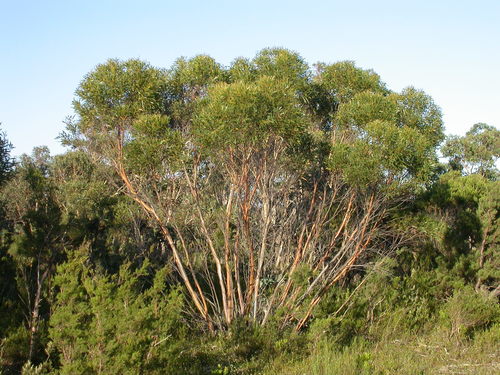
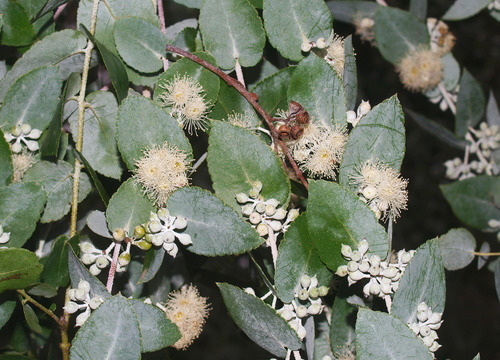
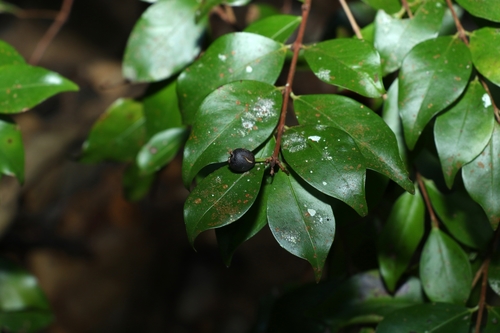
Melaleuca paludicola (scientific synonym: Callistemon paludosus F.Muell.) is a shrub or tree that grows up to 8 meters (30 feet) tall. Young plants have fibrous bark, while older individuals have hard, fissured bark. Its leaves are arranged alternately, measuring 20–68 mm (0.8–3 in) long and 1.3–8 mm (0.05–0.3 in) wide. The leaves are flat, linear to narrow lance-shaped, end in a small point, have a clearly visible mid-vein, and 11 to 18 indistinct side veins.
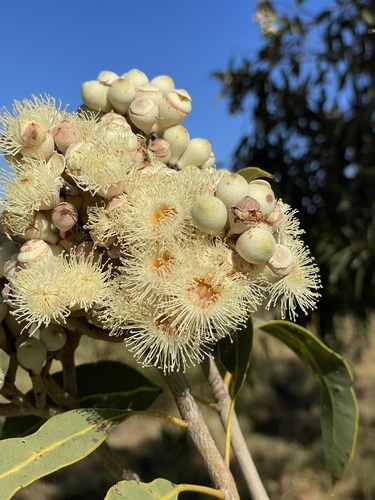
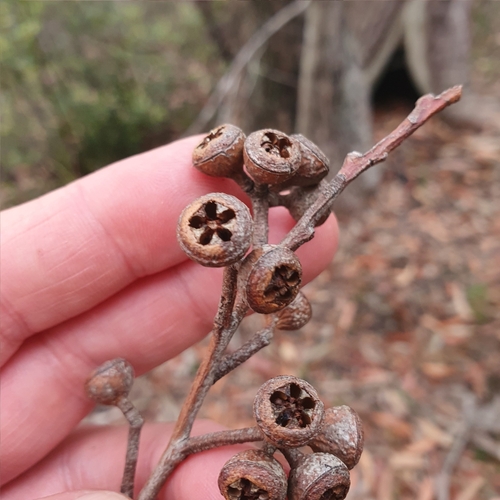
The flowers are most often cream to yellow, rarely pink, and arranged in spikes at the ends of branches (which continue growing after flowering) as well as on the sides of branches. The flower spikes are 20–30 mm (0.8–1 in) in diameter, holding 10 to 40 individual flowers. The petals are 2.6–4.2 mm (0.1–0.2 in) long and drop off as the flower ages, with 48 to 67 stamens per flower. Flowering happens mainly from October to January, followed by the development of woody, cup-shaped fruit capsules that are 3–4.3 mm (0.1–0.2 in) long.
This species is distributed from Warwick in far southeastern Queensland, through New South Wales extending inland to the eastern portion of the North West Plains, and reaches the eastern half of Victoria. There is also a separated disjunct population in the Mount Lofty Ranges and Adelaide districts of South Australia. It grows in, near, and alongside rivers, in dry rocky riverbeds, and in flood channels that experience periodic inundation.
In horticulture, Melaleuca paludicola is sometimes cultivated under the name Callistemon sieberi. An alpine form of this species is a smaller, denser, rounded shrub that works well as a more formal garden plant.