About Calliptamus italicus (Linnaeus, 1758)
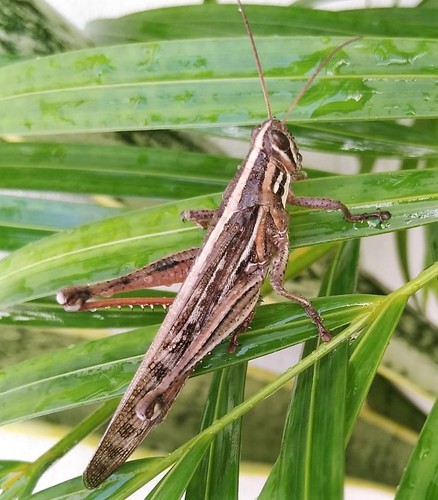
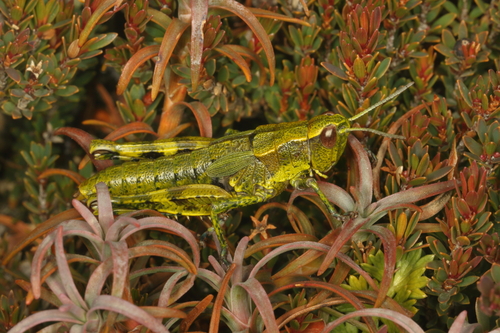
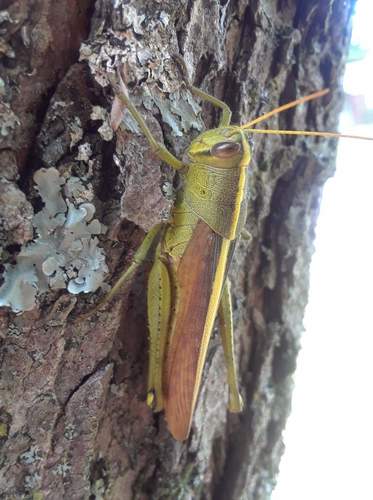
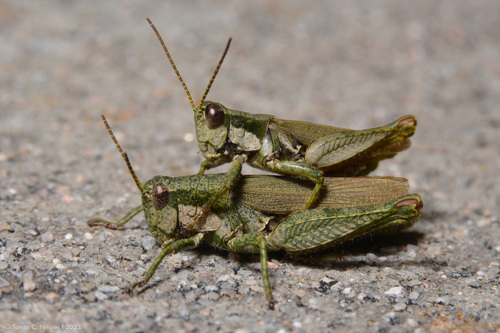
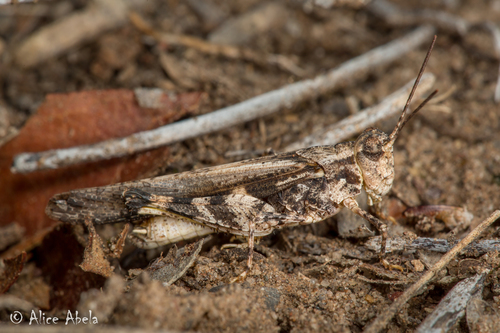
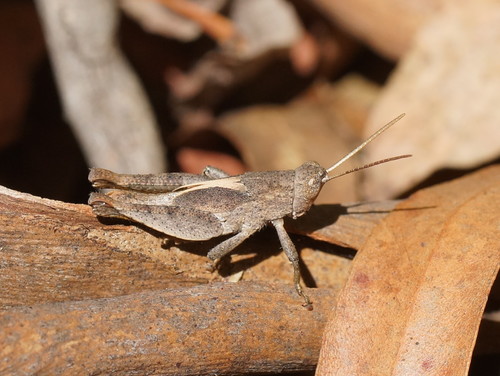
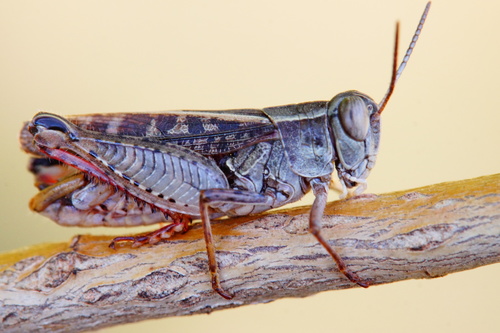
Calliptamus italicus, the Italian locust, is a medium-sized grasshopper that shows strong sexual dimorphism. Adult males reach a length of 14–26 millimetres (0.55–1.02 in), while adult females grow larger, reaching 21–40 millimetres (0.83–1.57 in) long. This species varies significantly in both size and coloration; its basic body color ranges from gray to brownish-reddish, and its wings have a distinctive reddish or pinkish color that is most visible when the insect is flying. A clearly visible dilating membrane called the 'pallium' is present on the male subgenital plate.
This species is distributed across Western Europe and Central Asia, with its range extending from North Africa and Mediterranean-bordering countries to Central Europe, Central Asia, Mongolia, and western Siberia. These grasshoppers are active from July through October. They grow best in warm, dry habitats with sparse vegetation cover, including grasslands, rocky steppes, old quarries, gravel pits, rocky riverbanks, sand dunes, and fallow land.
Calliptamus italicus is a polyphagous species that feeds on many different wild plants, and also feeds on crops, especially legumes. Alfalfa (Medicago sativa) is one of the preferred food sources for juvenile individuals. Sporadic infestations on grains and grapevine have also been reported. Known host plants belong to the families Asteraceae, Chenopodiaceae, and Poaceae.
The life cycle of this species lasts one year. Egg-laying occurs in late August to early September, usually in rocky areas that face south. Females lay eggs into soil inside an ootheca, which holds 25 to 55 eggs wrapped in a spongy secretion. Larvae emerge in May to June, and the first adults appear in July.
Under certain conditions, this species can develop gregarious behavior and form very large groups that may damage crops. It is normally found in low densities in undisturbed sparse grassland, and disappears when land is cultivated. It reaches high densities in uncultivated land invaded by Artemisia, and on overgrazed pastures with weeds and bare ground. In these conditions, it can become gregarious and form locust swarms. After the breakup of the USSR in 1991, large areas of agricultural land were left uncultivated, creating ideal breeding conditions for this species that allowed its populations to grow substantially. Kazakhstan experienced a devastating locust plague caused by Calliptamus italicus between 1998 and 2001.