About Callimedusa tomopterna (Cope, 1868)
Common Names and Taxonomic Placement
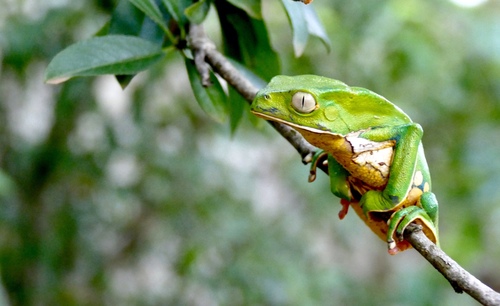
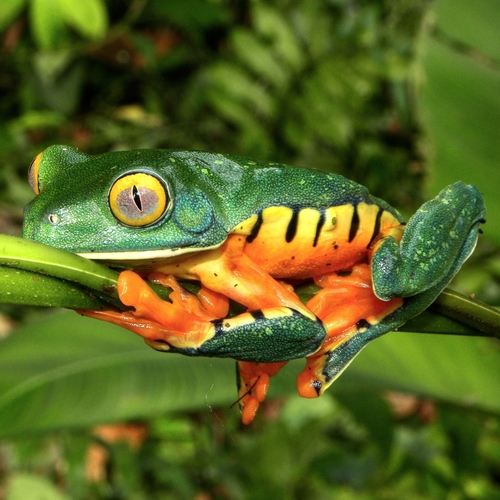
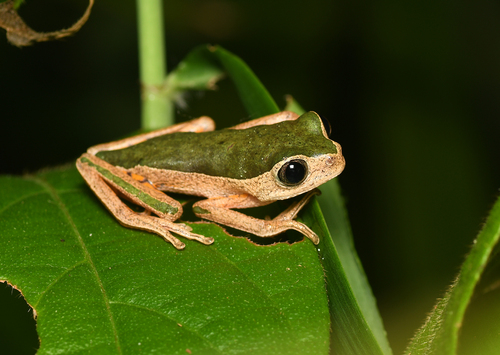
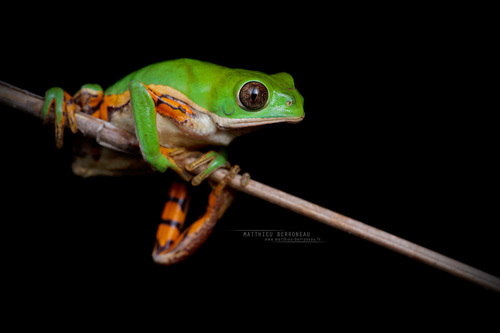
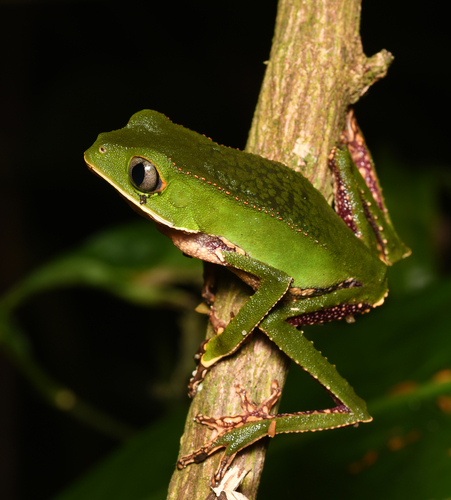
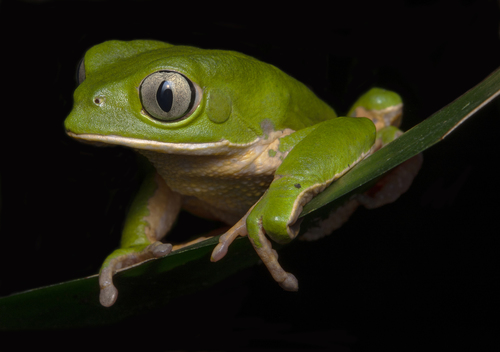
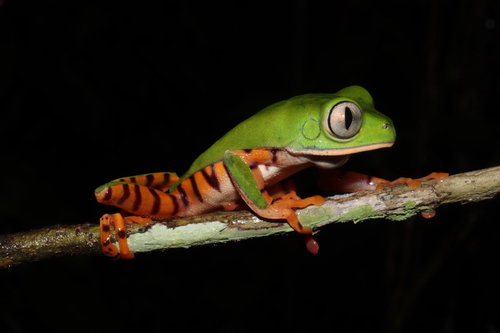
The tiger-striped tree frog, which is also known as the barred monkey frog and the barred leaf frog, is a frog species that belongs to the subfamily Phyllomedusinae. Its scientific name is Callimedusa tomopterna.
Geographic Distribution
This frog is native to northern South America, where it occurs in the Upper Amazon Basin of Bolivia, Peru, Ecuador, and Colombia, Amazonian Brazil, and the Guianas from southeastern Venezuela to French Guiana. It is possible that this taxon actually represents more than one distinct species.
Habitat Type
This is an arboreal species that lives in undisturbed tropical rainforests. During the wet season, it is typically found on trees surrounding temporary to semi-temporary pools.
Microhabitat Occurrences
Individual frogs have also been collected in open areas and floodable forests, living on shrubs along aquatic edges. Its range extends up to elevations of 500 m (1,600 ft) above sea level.
Population Status and Threats
It is an uncommon species across most of its distribution area, and it can face local threats from habitat loss.
Activity Pattern
Tiger-striped tree frogs are nocturnal: they rest during the day, and forage for food and communicate at night. Males use vocal calls to attract females at night.
Reproductive Egg-Laying Trait
For species in this family, a distinctive reproductive trait is how eggs are laid: eggs are placed on green leaves that hang over standing water, where tadpoles will then complete their development.
Shared Reproductive Sites
When suitable reproductive sites are scarce, multiple frog species may share the same site, which can sometimes lead to interspecific mating. This occurs particularly when males search for females using satellite behaviour, or when they have limited ability to distinguish between sexes.
Interspecific Mating Prevalence
This behaviour is quite common among many neotropical frogs, including the tiger-striped tree frog. Studies have recorded interspecific amplexus between Callimedusa tomopterna (the tiger-striped tree frog) and Dendropsophus minutus (the lesser treefrog).