About Calamagrostis villosa (Chaix) J.F.Gmel.
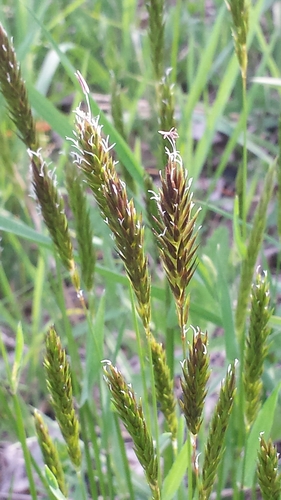
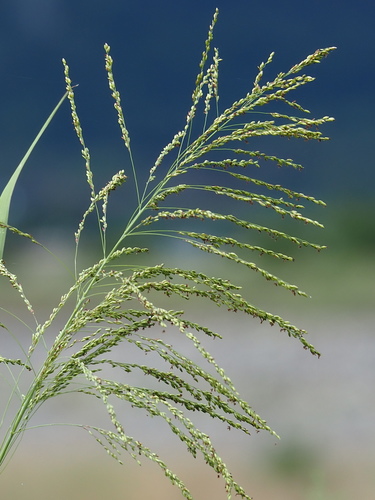
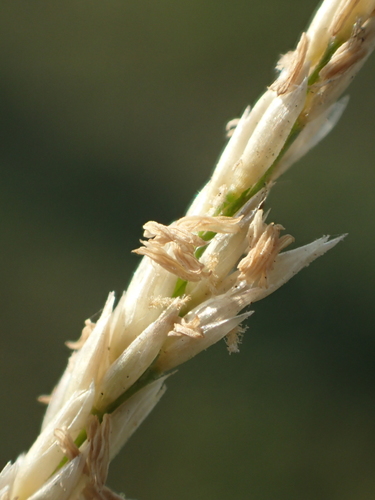
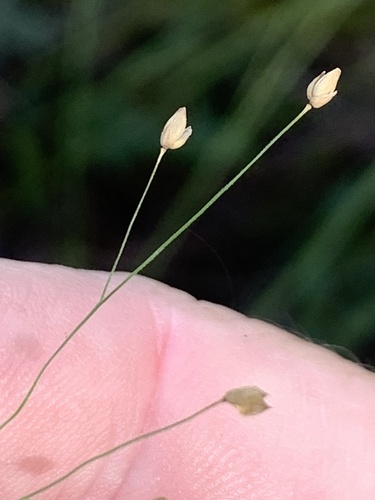
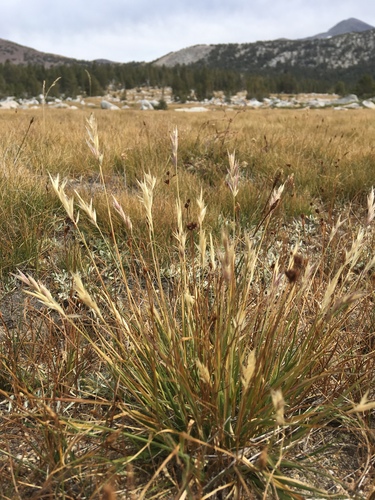
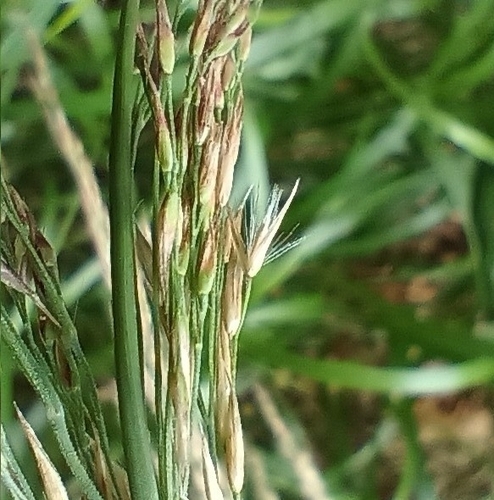
Calamagrostis villosa (Chaix) J.F.Gmel. is a perennial, caespitose species of grass that grows short rhizomes. Its culms measure 50–150 centimetres (20–59 in) in length. The ligule is a lacerate, eciliate membrane 3–5 millimetres (0.12–0.20 in) long. Leaf-blades are 3–8 millimetres (0.12–0.31 in) wide, with scabrous, pilose lower surfaces. The inflorescence is an open, linear panicle 8–20 centimetres (3.1–7.9 in) long and 3–6 centimetres (1.2–2.4 in) wide, with scaberulous branches. Spikelets are cuneate, measuring 4–6 millimetres (0.16–0.24 in), and each holds one fertile floret with a bearded floret callus. The fertile lemma is keelless, membranous, and oblong, 2.5–3.5 millimetres (0.098–0.138 in) long, with a dentate apex. The main awn of the lemma extends 0.5–0.6 millimetres (0.020–0.024 in) beyond the lemma, and measures 1–2 millimetres (0.039–0.079 in) in total length. Glumes are lanceolate, membranous, and have acuminate apexes; the upper glume matches the length of the spikelet. The pilose rhachilla measures 0.5 millimetres (0.020 in) long. Flowers have two lodicules, two stigmas, and three stamens. The fruits are caryopses with an additional pericarp and a punctiform hilum.