About Butyriboletus floridanus (Singer) G.Wu, Kuan Zhao & Zhu L.Yang
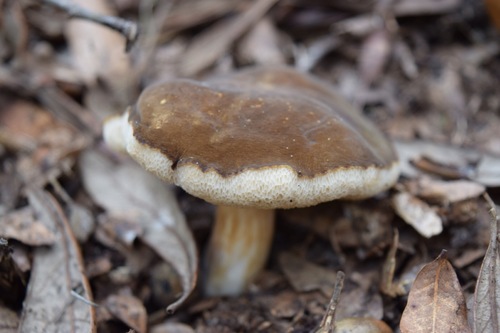
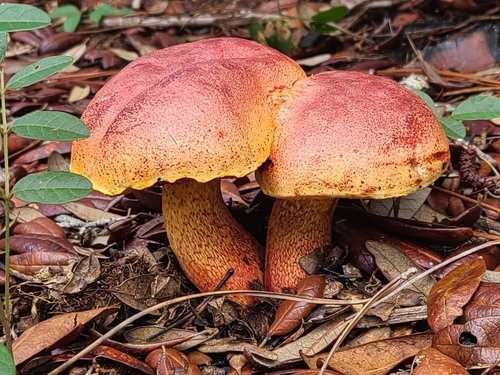
Butyriboletus floridanus (also known as Exsudoporus floridanus) is an edible bolete mushroom species in the family Boletaceae. In 1945, American mycologist Rolf Singer described the species after collecting it in Florida during his 1942–1943 tenure of a Guggenheim Memorial Fellowship. He originally classified it as a subspecies of the eastern North American species Boletus frostii, but elevated it to full distinct species status in a 1947 publication. In 2014, Vizzini and colleagues transferred the species to the newly described genus Exsudoporus, based on morphological and phylogenetic data. In 2016, Wu et al. were reluctant to recognize Exsudoporus as a valid genus due to insufficient available sequences, and considered it a synonym of Butyriboletus. Accordingly, they published the new combination Butyriboletus floridanus. Subsequent combined phylogenetic and morphological analyses have clearly resolved Exsudoporus as a monophyletic, homogenous, and independent genus that is sister to Butyriboletus. Exsudoporus floridanus can be distinguished from Exsudoporus frostii by its lighter cap color and cap surface texture: the cap of E. floridanus is tomentose (covered with dense, short, soft, matted hairs) or velutinous (velvet-like), while E. frostii has a relatively smooth cap surface. Singer noted that while physical differences between the two taxa can be blurry and hard to clearly define, geographic origin is a reliable indicator for identifying the two taxa. E. floridanus grows on shaded lawns and scrubland in open oak stands in non-tropical regions of Florida, usually in grassy or sandy soil. It grows under or near multiple oak species, including Chapman oak (Quercus chapmanii), swamp laurel oak (Quercus laurifolia), and southern live oak (Quercus virginiana), and produces fruit bodies between May and October.