About Butia capitata (Mart.) Becc.
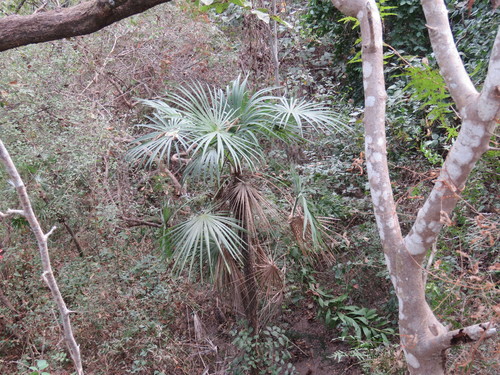
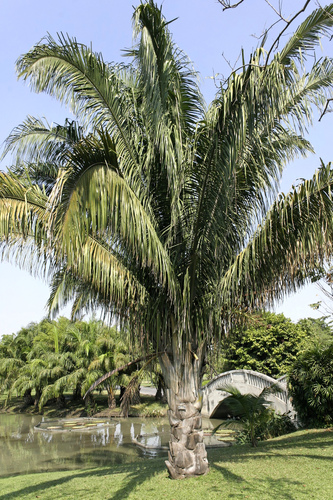
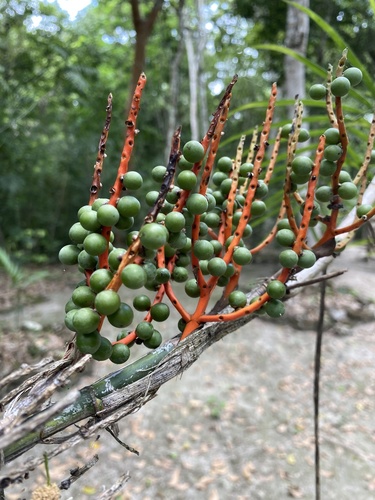
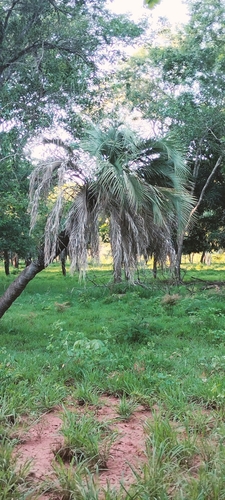
This is a palm species with the scientific name Butia capitata (Mart.) Becc. It can grow 8 to 10 metres (26 to 33 feet) tall. It has pinnate feather palm leaves that arch inward toward its thick, stout trunk. In Minas Gerais, Brazil, this palm flowers from May to July and produces fruit from November to February. Ripe fruits are roughly the size of a large cherry, yellowish-orange in color, and may have a reddish blush near the tip. The fruit has orange skin that is sometimes red; its pulp is bright orange, highly aromatic, somewhat oily, and quite fibrous. This plant is native to Brazil, occurring in the states of Minas Gerais and Goiás. Local common names for this species are coquinho-azedo and butiá, the latter used in northern Minas Gerais. Locally, people harvest wild fruits of this palm between November and February to make juice, liquor, marmalades, and ice cream. The pulp can be frozen for use in industrial production. In northern Minas Gerais state, Butia capitata juice is added to some public school lunches. An oil similar to coconut oil can be extracted from the plant's nuts.