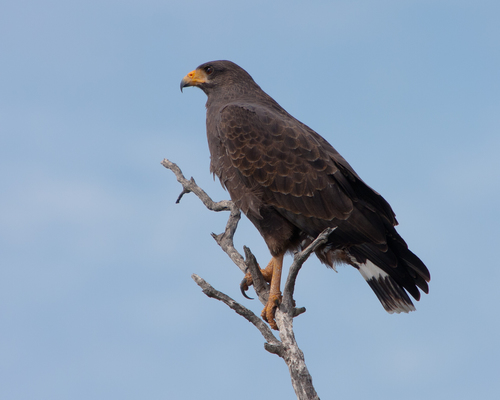
About Buteogallus gundlachii (Cabanis, 1855)
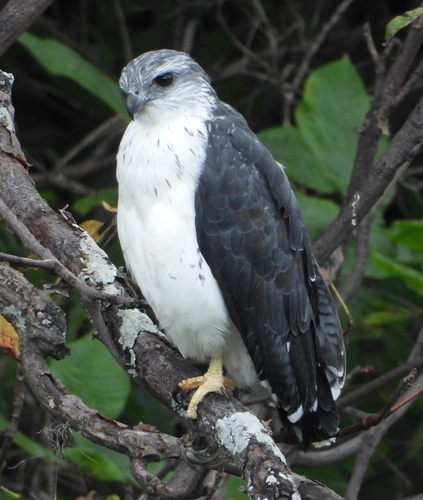
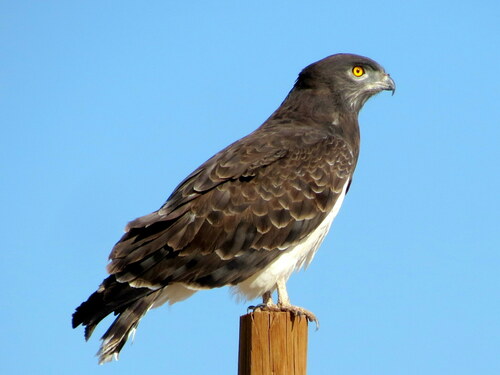
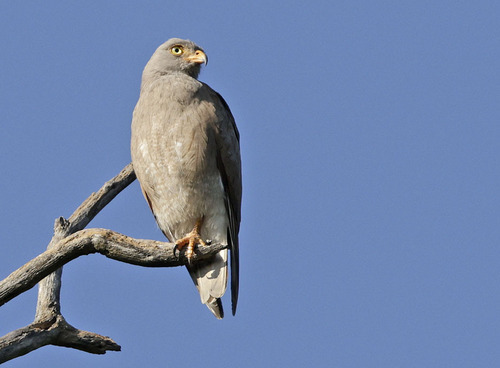
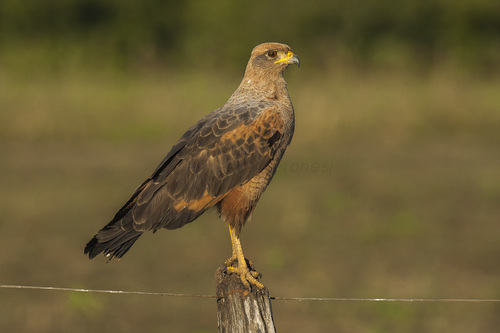
This species, Buteogallus gundlachii, has an average body length of 53 cm (21 in). Its plumage is mainly dark brown, almost black. A lighter greyish or whitish patch can be present on the face between the bill and the eye. When in flight, white patches at the base of the primary flight feathers are visible. The tail has wide alternating black and white stripes. The legs are yellow, and the bill is yellow with a black tip. On average, females are slightly larger than males. This species, the Cuban black hawk, is endemic to Cuba. It occurs primarily in coastal and mangrove regions and on Isla de la Juventud, and can also be found in wooded areas, even near mountains on the main island, as well as on several outlying cayes. Most sightings of the Cuban black hawk are recorded at elevations below 800 meters above sea level. The species feeds mainly on crabs, and also preys on small vertebrates including fish, lizards, rodents, and birds. Cuban black hawks mostly breed between March and June, though breeding can occur as early as January. They build nests in the sub-canopy of mangrove trees; nests are typically constructed from mangrove twigs and lined with foliage. Females lay 1 to 2 dark-spotted eggs that measure 42 to 56 mm in length. The species is monogamous and forms long-term breeding pairs.